


































Is Modbus RS-485? We clear up the most common doubts in industrial automation

In the industrial automation and BMS environment, we very often encounter terms such as Modbus RTU, RS-485, or a Modbus gateway. In the case of the first two terms, they are often used interchangeably, which leads to a fundamental question: is Modbus RS-485?
Modbus and RS-485 are two concepts that are inseparably connected, but they still mean something completely different. Understanding the difference between them is crucial for correct network configuration, device selection, and communication troubleshooting.
What is the difference between Modbus and RS-485?
The simplest way to understand this relationship is to use a comparison to what we use every day—our speech—and so Modbus is the language that devices use (the protocol), while RS-485 is the medium through which that language is transmitted (the physical layer). Expanding this comparison, it is best to briefly characterize Modbus and RS-485 to reach these differences:
1. Modbus: Communication Protocol (Software)
Modbus is a set of rules that defines how data is packed and addressed. It defines the structure of the data frame: who speaks (Master), who listens (Slave), and what the individual bytes of information mean. The most popular variant that uses wiring is Modbus RTU.
2. RS-485: Transmission Standard (Hardware)
RS-485 defines the electrical parameters of the signal. It defines that communication takes place over a pair of twisted wires, uses differential voltage (which ensures high noise immunity), and allows multiple devices to be connected on one line (bus) over a distance of up to 1200 meters.
Why do people so often ask online whether Modbus is RS-485?
Confusing these concepts comes from the fact that, in industry, they form an ideal combination. Most energy meters, temperature sensors, or drives use Modbus protocol transmitted over the RS-485 standard.
However, it is worth remembering that:
- Modbus can also be transmitted over Ethernet (Modbus TCP).
- The RS-485 standard can support other protocols, e.g., BACnet MS/TP or Profibus DP.
Therefore, the answer to the question: is Modbus RS-485? is: No, they are two different elements of a communication system that work together.
Modbus gateway – the key to system integration
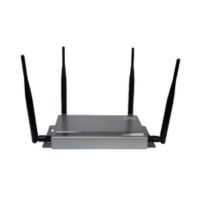
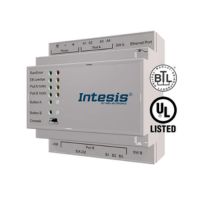
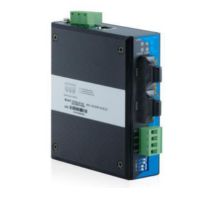
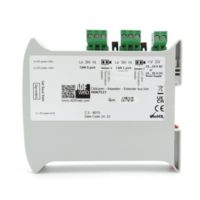
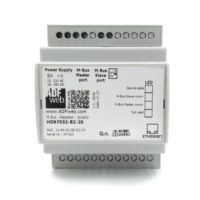
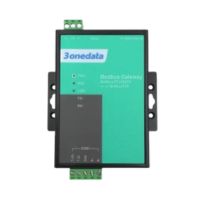
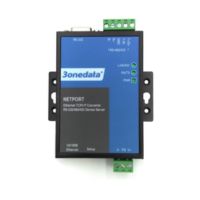
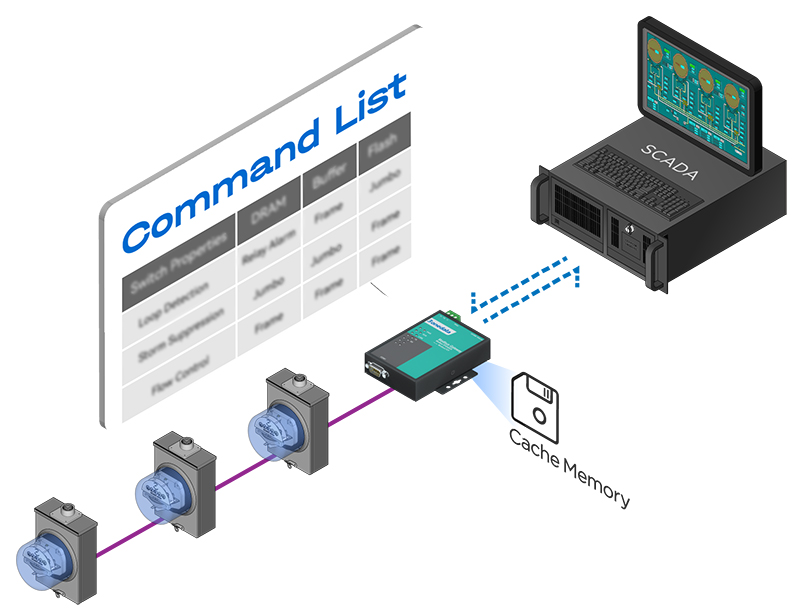
In modern installations, there is often a need to connect older devices operating on RS-485 with modern supervisory systems running in IP networks. This is where a Modbus gateway comes in (often called a protocol converter or, in English, a gateway).
A Modbus gateway acts as a translator:
- It receives data from the RS-485 bus (Modbus RTU).
- It converts it into a format understood by the Ethernet network (Modbus TCP).
- It enables viewing machine operating parameters from a web browser or a SCADA system.
Investing in a high-quality Modbus gateway allows seamless connection between the world of operational technology (OT) and the world of IT.
Modbus vs RS-485 – differences you need to remember
If you are designing a network and wondering is Modbus RS-485?, remember that when buying a device labeled "Modbus", you must check what interface it requires (most often it will be RS-485, but RJ45 ports for Modbus TCP are increasingly common) and whether there will be a need to use devices such as a Modbus gateway to connect older devices with newer systems. To make it easier to understand the differences between Modbus and RS-485, it is worth remembering the most important differences shown in the table below. However, the most important thing to remember is that Modbus is not the same as RS-485.
| Feature | Modbus (RTU/TCP) | RS-485 |
| Type | Protocol (Language) | Physical standard (Cable/Signal) |
| What does it define? | Data structure, addressing, errors | Voltage, distance, noise immunity |
| Example | "Read value from register 40001" | "Send a 5V pulse over twisted pair" |