

































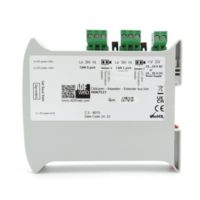
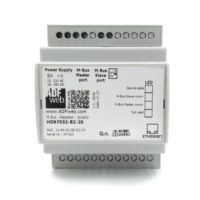
M-Bus Converters for BMS and Automation Systems
-120x120w.png)







-120x120w.png)





2 years warranty
3-4 days
Brand: ADF Web
Model: HD67053-B2-160
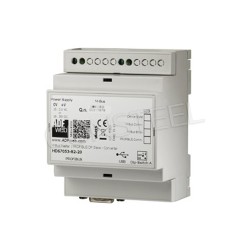
Industrial MBus to PROFIBUS converter, master MBus up to 160 slaves, PROFIBUS DP DPV0 support, housing type B (wide), DIN rail mount. HD67053-B2-160 allow to monitor some MBus meters (like Engelmann, Amber-Wireless, Maddalena, Siemens) with a PROFIBUS net (like an SIEME..
835.00 €
2 years warranty
3-4 days
Brand: ADF Web
Model: HD67056-B2-160
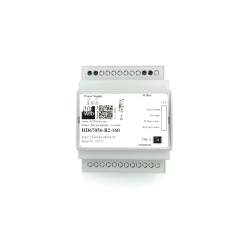
Industrial MBus to BACnet Ethernet IP converter with up to 160 MBus slaves, housing type B (wide), DIN rail mount. The converter for communication with meters uses the MBus, Ethernet connector is used for BACnet IP communication. The HD67056-B2-160 converter can read up..
835.00 €
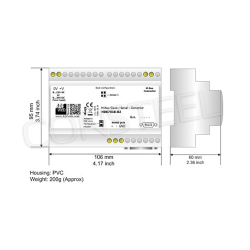
2 years warranty
3-4 days
Brand: ADF Web
Model: HD67056-MSTP-160
Industrial MBus to BACnet MS/TP converter with RS-485 interface with up to 160 MBus slaves. The converter for communication with meters uses the MBus, RS-485 connector is used for BACnet MS/TP communication. The HD67056-MSTP-160 converter can read up to 160 MBus receive..
835.00 €
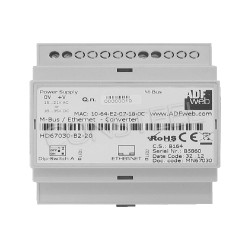
2 years warranty
3-4 days
Brand: ADF Web
Model: HD67078-B2-160
Industrial MBus to PROFINET converter, master MBus up to 160 slaves, housing type B (wide), DIN rail mount. The converter for communication with meters uses the MBus, Ethernet connector is used for PROFINET communication. The HD67078-B2-160 converter can read up to 160 ..
835.00 €
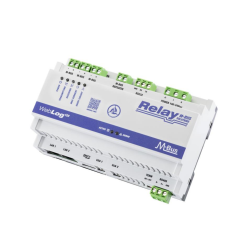
5-10 days
Brand: Relay
Model: WebLog120
WebLog120 – compact M-Bus data logger with integrated web server.WebLog120 is an industrial M-Bus data logger with an integrated
web server, designed for centralized meter reading, data archiving
and distribution in professional metering systems.
The device..
882.70 €
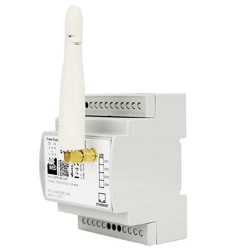
2 years warranty
3-4 days
Brand: ADF Web
Model: HD67F15-B2-868MHz-250
Industrial LoRaWAN gateway to M-Bus, up to 250 Slaves, housing type B (wide), DIN rail mounting, LoRaWAN 868MHz antenna protocol.The HD67F15-B2 are M-Bus Master / LoRaWAN gateway.They allow to publish (Uplink) the data read from the Modbus Slaves into a LoRaWAN Gateway..
901.00 €
2 years warranty
3-4 days
Brand: ADF Web
Model: HD67F15-B2-915MHz-250
Industrial LoRaWAN gateway to M-Bus, up to 250 Slaves, housing type B (wide), DIN rail mounting, LoRaWAN 915MHz antenna protocol.The HD67F15-B2 are M-Bus Master / LoRaWAN gateway.They allow to publish (Uplink) the data read from the Modbus Slaves into a LoRaWAN Gateway..
901.00 €
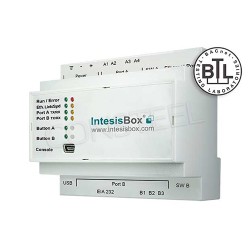
3 years warranty
5-7 days
Brand: Intesis
Model: INBACMEB0100000
M-Bus to BACnet Gateway INBACMEB0100000 for up to 250 points and 10 devices. The INBACMEB0100000 is a professional M-Bus to BACnet gateway developed by Intesis (HMS Networks), designed to offer seamless bidirectional communication between M-Bus meters (up to 10 ..
906.00 €
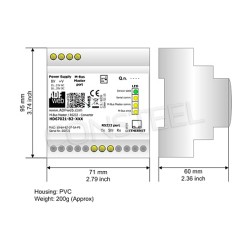
2 years warranty
3-4 days
Brand: ADF Web
Model: HD67058-B2-160
Industrial MBus Master to DeviceNet Converter, Master MBus up to 160 slaves, housing type B (wide), DIN rail mount. HD67058-B2-160 allow to monitor some MBus meters (like Engelmann, Amber-Wireless, Maddalena, Siemens, exc. meters) with a DeviceNet net (like an Allen-Bra..
945.00 €
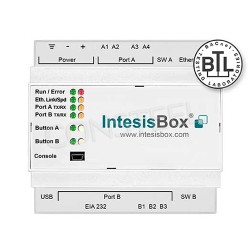
3 years warranty
5-7 days
Brand: Intesis
Model: IBOX-BAC-MBUS
MBus to BACnet Gateway. The IntesisBox Gateway has been specially designed to allow bidirectional control and monitoring of all parameters and functionalities of M-Bus Meters from a BMS, SCADA, PLC or any other device working as a BACnet client.Specification:Ports:Port ..
949.00 €
3 years warranty
5-7 days
Brand: Intesis
Model: INBACMEB0200000
M-Bus to BACnet Gateway up to 500 points. The INBACMEB0200000 industrial gateway by Intesis is a dedicated solution for seamless integration between M-Bus metering devices and BACnet-based building automation systems. This advanced converter enables full bidirect..
1,000.00 €
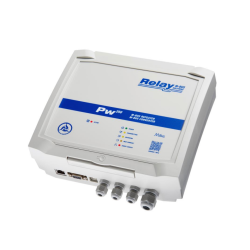
5-10 days
Brand: Relay
Model: PW-250
PW250 supports up to 250 M-Bus meters and simplifies bus expansion.
PW250 is an industrial M-Bus level converter and M-Bus repeater designed for large metering installations where stable communication, convenient integration with the master system and fur..
1,008.80 €