How do industrial MQTT to NMEA 2000 and NMEA 0183 converters work?
NMEA 2000 and NMEA 0183 are communication standards widely used
in marine, yachting and navigation systems, as well as in monitoring and automation
for specialized vehicles and mobile applications.
NMEA protocols enable data exchange between sensors, GPS receivers, radars,
echo sounders, engine monitoring systems and other measurement devices.
MQTT is a lightweight publish/subscribe communication protocol
commonly used in IoT and telemetry systems.
An MQTT to NMEA 2000 / NMEA 0183 protocol converter enables bidirectional integration
between traditional NMEA networks and modern MQTT-based systems.
Data from NMEA devices can be published to an MQTT broker,
while MQTT messages can be interpreted and transmitted
to the NMEA network as standard-compliant NMEA 2000 or NMEA 0183 frames.
MQTT communication can be additionally secured using TLS/SSL encryption.
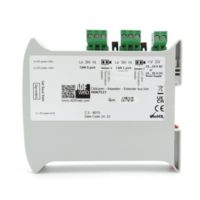
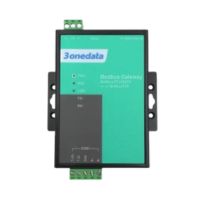
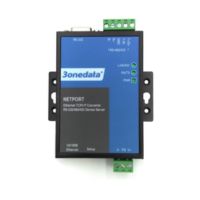
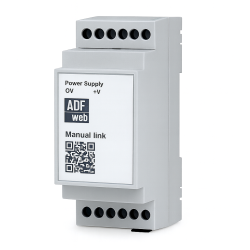
Industrial MQTT to NMEA 2000 / 0183 converters
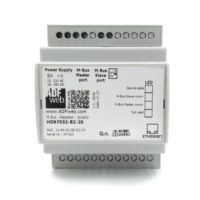
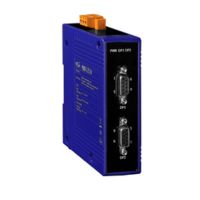
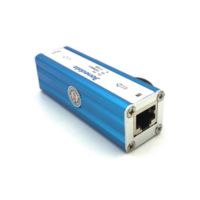
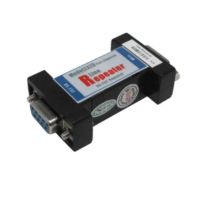
Every MQTT to NMEA 2000 or NMEA 0183 converter available in our offer
is an industrial-grade device designed for continuous operation
in demanding environmental conditions.
The converters are suitable for DIN-rail mounting,
resistant to electromagnetic interference and vibration,
and engineered to operate over a wide temperature range.
Industrial MQTT to NMEA converters support Ethernet interfaces,
NMEA 2000 (CAN bus) and NMEA 0183 (RS-422 / RS-485),
enabling seamless integration with telemetry systems,
IoT platforms, SCADA systems, cloud-based applications
and remote monitoring solutions for vessels and mobile assets.
How to connect an NMEA network to MQTT?
Connecting an NMEA 2000 or NMEA 0183 network to an MQTT infrastructure
is achieved using a dedicated MQTT to NMEA converter
acting as an intelligent communication bridge.
The device connects locally to the NMEA network,
while communication with the MQTT broker is handled
via Ethernet (LAN or VPN).
This approach enables remote access to navigation data,
engine parameters, environmental sensors
and other NMEA-connected devices from supervisory systems.
MQTT–NMEA integration is commonly used
in marine monitoring systems, offshore applications,
fleet management and advanced telemetry projects.
How to configure an MQTT to NMEA converter?
Configuration of an MQTT to NMEA 2000 / NMEA 0183 protocol converter
is performed using dedicated manufacturer software
or a web-based configuration interface.
The setup process does not require any changes
to the existing NMEA installation,
allowing fast and secure deployment.
During configuration, parameters such as:
mapping NMEA messages to MQTT topics,
data flow direction,
MQTT broker connection settings,
and data filtering and interpretation rules are defined.
This allows the converter to be precisely adapted
to the specific application requirements.
Why use MQTT to NMEA converters?
Using MQTT to NMEA converters makes it possible to integrate
traditional navigation and measurement systems
with modern IoT platforms and data analytics environments.
It is a scalable, flexible and future-proof solution
that enables centralized data access
and remote supervision of distributed installations.
Select the MQTT to NMEA 2000 or NMEA 0183 converter
best suited to your application
and review the detailed technical specifications
of the available models below.