Industrial EtherCAT to Modbus TCP converters – what are they used for?
An industrial EtherCAT to Modbus TCP converter is designed to integrate
control systems based on the high-speed, real-time EtherCAT protocol
with devices communicating via Modbus TCP.
This type of converter is widely used in modern industrial automation,
where PLCs, motion controllers, or central control systems operate on EtherCAT,
while field devices use Modbus TCP over Ethernet.
Using a converter eliminates the need to replace existing equipment,
simplifies system upgrades, and allows a unified communication architecture.
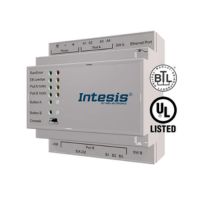
The EtherCAT to Modbus TCP converter acts as a protocol gateway,
continuously mapping process data between both networks in a stable and predictable way.
How does an EtherCAT to Modbus TCP converter work?
The converter operates as a communication bridge between two independent protocols.
On the EtherCAT side, it appears as a standard real-time slave device,
while on the Modbus TCP side it works as a client or server communicating
with Ethernet-based Modbus devices.
Modbus TCP data (holding registers, input registers, coils)
is mapped into the EtherCAT process data area.
This allows the PLC to:
- read measurement values from Modbus TCP devices,
- write control commands and setpoints,
- monitor alarms and diagnostic statuses,
- exchange data with SCADA or MES systems.
Industrial EtherCAT to Modbus TCP converters ensure reliable data exchange,
even in systems with a large number of devices and strict real-time requirements.
Where are EtherCAT to Modbus TCP converters used?
The EtherCAT to Modbus TCP converter is commonly used
wherever modern EtherCAT-based control systems must be connected
to existing Modbus TCP infrastructure.
-
Production lines and machinery: integration of drives,
meters, auxiliary controllers, and measurement devices with EtherCAT PLCs.
-
Retrofit and modernization projects: connecting Modbus TCP devices
to new EtherCAT control platforms without replacing field equipment.
-
Energy and power monitoring: real-time acquisition of energy consumption
and power quality data.
-
Industrial and building automation: integration of HVAC,
cooling systems, and technical installations into EtherCAT networks.
Such applications are common in industrial plants across Europe,
where mixed protocol environments are frequently encountered.
What features should an industrial EtherCAT to Modbus TCP converter offer?
When selecting an industrial EtherCAT to Modbus TCP converter,
it is important to focus on features that ensure system reliability and scalability:
- support for multiple Modbus TCP devices,
- flexible register and process data mapping,
- configurable update times and communication timeouts,
- advanced diagnostics and error indication,
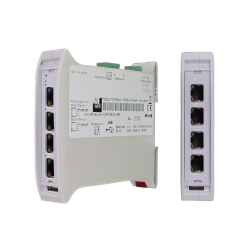
- industrial housing with DIN-rail mounting,
- high immunity to interference and 24/7 operation.
A properly selected EtherCAT to Modbus TCP converter
enables a stable and efficient communication system,
simplifies commissioning, and helps reduce downtime in industrial applications.