MQTT to Ethernet/IP protocol converters – what are they used for?
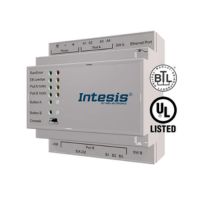
A MQTT to Ethernet/IP protocol converter is an industrial communication gateway designed to connect the IT/IoT world with
industrial automation systems based on EtherNet/IP.
In practice, it enables process and diagnostic data from PLCs, remote I/O modules, drives, and industrial devices operating in an
EtherNet/IP network to be transferred to IoT platforms using the MQTT protocol.
Data is typically published to an MQTT broker, and in many applications the communication is bidirectional, allowing commands or parameters
from cloud or supervisory systems to be mapped back to the EtherNet/IP network.
Why MQTT and EtherNet/IP require a protocol converter
MQTT is a lightweight publish/subscribe protocol optimized for telemetry and IoT integrations, where devices publish data to topics
handled by a broker. EtherNet/IP, on the other hand, is a widely adopted industrial communication standard used in automation and machine control,
where deterministic data exchange and structured access to industrial devices are essential.
A MQTT to Ethernet/IP protocol converter acts as an intelligent bridge between these two worlds, translating data structures,
communication models and timing requirements into a unified, reliable interface suitable for industrial environments.
Typical applications of MQTT to Ethernet/IP converters
This category of protocol converters is most commonly used in applications where production data from automation systems
needs to be leveraged by higher-level IT or IoT platforms. Typical use cases include:
- Production monitoring and OEE analysis – publishing machine states and process values to MES, SCADA or BI systems via MQTT.
- Predictive maintenance – transferring diagnostics, alarms, counters and runtime data from EtherNet/IP devices to analytics platforms.
- Cloud and on-premise IoT integration – standardizing data exchange using MQTT as a common industrial IoT layer.
- Remote service and diagnostics – accessing operational data without modifying PLC logic.
- Heterogeneous system integration – connecting EtherNet/IP-based automation with IT infrastructures built around MQTT.
How does a MQTT to Ethernet/IP converter work in practice?
In a typical configuration, the user defines:
(1) which devices and variables are accessed within the EtherNet/IP network,
(2) how these values are mapped to MQTT topics, payloads and publishing intervals,
and (3) whether data written from MQTT back to EtherNet/IP is required.
The converter continuously exchanges data with the EtherNet/IP network and publishes selected information to the MQTT broker,
allowing subscribing applications to receive near real-time industrial data.
In industrial environments, reliability and long-term stability are critical.
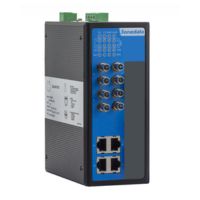
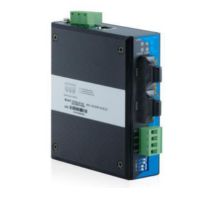
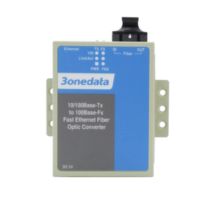
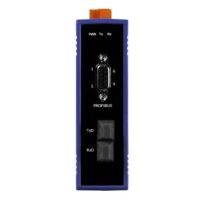
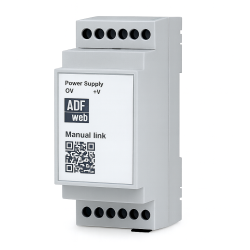
Therefore, MQTT to Ethernet/IP converters are typically designed for DIN-rail mounting,
continuous 24/7 operation and reliable performance in electrically noisy industrial networks.
Technical and business benefits
- Fast IoT deployment without PLC modifications – existing automation systems remain unchanged.
- Scalable data distribution – MQTT enables multiple consumers to subscribe to the same industrial data.
- Improved process visibility – EtherNet/IP data becomes available for reporting and optimization.
- Standardized integration layer – MQTT simplifies multi-site and multi-system architectures.
- Enhanced maintenance strategies – earlier detection of anomalies and performance trends.
Key selection criteria for MQTT to Ethernet/IP converters
When selecting a MQTT to Ethernet/IP protocol converter, consider the following aspects:
- EtherNet/IP role – compatibility with your PLC and network topology.
- Data mapping flexibility – number of variables and MQTT topic structure.
- Security mechanisms – authentication and controlled broker access, depending on the model.
- Performance – publishing rates aligned with process requirements.
- Industrial design – DIN-rail mounting, EMC robustness and operating temperature range.
- Engineering support – availability of configuration assistance and testing.
Typical deployment architectures
The most common architectures include:
(1) EtherNet/IP in the OT layer with MQTT used to forward data to IT or cloud systems via a local or cloud-based broker,
and (2) centralized MQTT brokers collecting data from multiple production lines, each equipped with its own
MQTT to Ethernet/IP converter. The latter approach supports scalability and standardization across multiple industrial sites.
Procurement and deployment in EU industrial projects
In industrial projects, delivery time, correct device selection and implementation support are essential.
At CONSTEEL Electronics, we support customers across Europe with fast delivery and technical guidance,
helping to select MQTT to Ethernet/IP converters that match specific PLCs, automation architectures and IoT platforms.
Need technical support or help selecting the right solution?
Contact Consteel Electronics:
https://consteel-electronics.com/contact-us