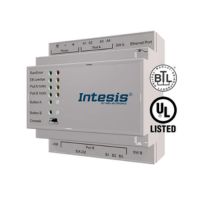
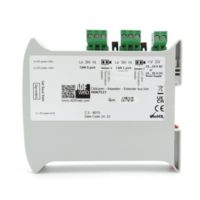
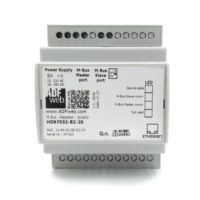
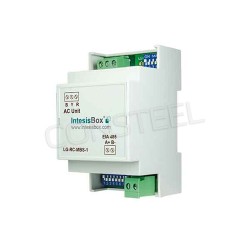
LG Modbus gateway (Modbus RTU RS-485) – integrating LG air conditioning with building automation
You are looking for an LG Modbus solution because you want to connect LG air conditioning to a PLC controller or a BMS system via
Modbus RTU (RS-485). That is exactly what the gateways and interfaces in this category are for: they translate communication from LG devices into Modbus registers
that you can read and write in your automation system.
In practice, this implementation gives you convenience and consistency: LG HVAC works as part of the building system (scenes, schedules, presence logic, energy priorities),
not as a separate “island” managed only with a remote control or the manufacturer’s panel.
What is LG Modbus gateway and when does it make sense?
LG Modbus gateway is simply integratingan LG air conditioning system with automation via Modbus RTU RS-485.
Instead of controlling HVAC separately, you can connect it to the building logic: zone control, responses to sensor signals, ECO modes,
automatic limits outside working hours, or alarming in the supervisory system.
This solution is most often chosen in three situations:
-
New installations and retrofits, when you are building a BMS/PLC anyway and want LG HVAC in the same system.
-
Multi-zone facilities (offices, retail, hotels), where schedules and scenes have a real impact on costs.
-
Service requirements, when you want statuses and alarms in one place (depending on the scope of mapping).
Which functions are typically brought to Modbus in LG integration?
The exact points depend on the LG system and the chosen interface, but in typical LG → Modbus RTU deployments
the focus is mainly on functions needed for comfort automation and energy savings:
- Start/Stop and basic operating statuses
- Operating mode (e.g., cooling/heating/auto – depending on the installation)
- Setpoint temperature and often selected temperature readings
- Fan speed and/or airflow settings
- Alarms/error codes for visualization and notifications
For the end user, the most important thing is that the BMS can control HVAC “the building way”: by schedule, scenes, and rules,
without manually changing parameters on many indoor units.
RS-485 in practice: what matters for LG Modbus?
Modbus RTU over RS-485 is predictable, but it requires proper “cabling engineering”. In real LG Modbus commissioning, these factors most often make the difference:
- Bus topology (line instead of star) and consistent cable routing
- Termination at the ends and a sensible baud rate selection for the cable length
- Addressing and orderly register mapping on the PLC/BMS side
- EMC immunity (shielding, separation of cable routes – depending on the facility)
These are simple things, but in practice they determine whether the integration runs stable after deployment – without “disappearing” readings and without random timeouts.
LG Modbus use cases: where is this integration most often deployed?
- Offices and service facilities – schedules, scenes, presence logic, limits outside working hours
- Retail – control based on opening hours and centralized supervision of multiple locations
- Hotels and apartments – ECO modes and zone control based on occupancy
- Warehouses and industry – monitoring of statuses/alarms and automatic responses to operating conditions
Selecting LG Modbus for your project
Provide the LG installation type, the number of indoor units/zones, and the supervisory system (PLC/BMS/SCADA). We will select the right model and recommend best commissioning practice.
Contact a Consteel expert
FAQ – LG Modbus
Does LG Modbus work with any PLC/BMS controller?
Yes, if the controller supports Modbus RTU over RS-485 – integration comes down to reading and writing registers.
What can be controlled via LG Modbus?
Most commonly: start/stop, operating mode, setpoint, fan, plus statuses and alarms – the scope depends on the LG system and the interface.
INMBSLGE001R000 or IN485UNI001I100 – which should I choose?
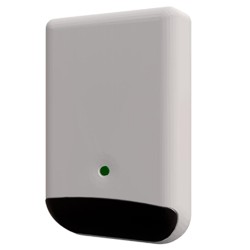
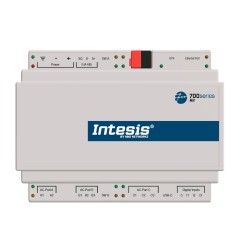
If you can integrate via wired communication with the LG system, INMBSLGE001R000 is usually chosen; IR (IN485UNI001I100) is practical in retrofits.
Do you need to terminate RS-485?
In most installations yes – proper termination and a line topology significantly improve Modbus RTU stability.
Can the integration be expanded to many zones/units?
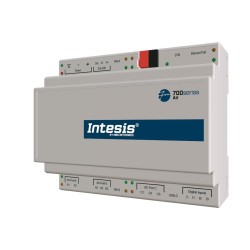
Yes – selection depends on scale and expected points. For larger projects, a “centralized” approach often works well (e.g., IN770AIRXXSO000).
How quickly can LG Modbus be commissioned?
The most time is spent defining points and logic in the PLC/BMS; Modbus communication itself is quick when RS-485 is implemented correctly.