






































DALI protocol - Principles, benefits and applications
1. Introduction - What is the DALI protocol
The DALI (Digital Addressable Lighting Interface) protocol is a communication standard designed to manage lighting in building automation systems. Its main purpose is to enable precise control of lighting devices such as lamps, bulbs, dimmers, sensors and other lighting system components. With DALI, it is possible to easily address and control devices through a single common interface, enabling central lighting management in smart buildings, offices or other commercial spaces.
DALI provides a high degree of flexibility and simplicity of installation, making it a popular solution for modern lighting systems where both energy efficiency and user comfort are important. The DALI protocol is often used in conjunction with other building automation systems such as HVAC (heating, ventilation, air conditioning) to provide comprehensive building management.
2. The principle of the DALI protocol
The DALI protocol works on the principle of master-slave communication, in which DALI devices (e.g. lamps, dimmers, sensors) are connected to a common bus. In this system, the devices are individually addressed, allowing precise control of each device. Each device in a DALI system has a unique address that allows it to be identified on the network.
There can be different devices on the DALI network that send and receive data. The DALI system allows you to control the status of the devices (e.g. switch on, switch off, brightness control), as well as monitor their status (e.g. fault detection). Communication between devices is via digital signals transmitted over a two-wire bus, ensuring simplicity of installation and low system maintenance costs.
One of the key elements of the DALI protocol is the ability to group devices into zones or scenes, allowing lighting to be synchronised in different parts of a building or within a single application. The protocol also allows integration with other systems such as building management systems (BMS) or HVAC systems.
3 Advantages of the DALI protocol
The DALI protocol offers a number of advantages that make it the preferred solution for many lighting systems:
- Flexibility and scalability - DALI allows new devices to be easily added to the system and device groups to be created, giving great flexibility in the design of lighting installations.
- Precise control - The protocol allows individual control of each device in the system, ensuring accuracy and energy savings.
- Energy efficiency - With the ability to adjust the brightness and power supply of devices as required, DALI contributes to energy savings in buildings.
- Easy installation and configuration - Installation of the DALI system is relatively straightforward, with no complex wiring or minor modifications to the existing lighting installation.
- Interoperability - DALI provides the ability for equipment from different manufacturers to work together, enabling the creation of diverse lighting systems without being limited to a single supplier.
4. Applications of the DALI protocol
The DALI protocol is widely used in a variety of industries, especially where precise lighting control and energy optimisation are required. Here are examples of applications of the DALI protocol:
- Intelligent buildings - In building automation systems, DALI is used to manage lighting in offices, hotels, schools and other public buildings. With DALI, it is possible to adapt the lighting to the room conditions and the preferences of the users.
- Industrial lighting - DALI is used in production halls, warehouses, factories, where precise lighting control improves working comfort and energy efficiency.
- Lighting in commercial spaces - DALI is used in shopping malls, galleries or museums, where lighting needs to be flexibly adapted to changing conditions and user needs.
- Energy management systems - The DALI protocol enables integration with energy management systems, allowing the monitoring and optimisation of energy consumption of lighting equipment throughout a building.
- Exterior lighting - DALI can also be used in outdoor lighting systems, such as street, park or square lighting, enabling remote control and monitoring of lighting status.
5. Types of equipment in the DALI system
The DALI system consists of various devices that work together to effectively manage lighting in buildings. Here are some of the main types of devices that can be part of a DALI system:
- Lighting controllers - Devices that control brightness levels and switch lighting on/off. Controllers can be used to adjust the brightness of individual lamps or groups of lights.
- DALI light sources - Lamps and luminaires equipped with a DALI interface that allow precise control of their brightness and on/off switching. These devices include traditional incandescent lamps as well as modern LED sources.
- Dimmers - Devices used to adjust the brightness of lighting, allowing light levels to be adjusted to suit different user needs and changing lighting conditions.
- Sensors - Devices, such as motion sensors, light intensity sensors or presence sensors, that can automatically control lighting based on changing environmental conditions (e.g. turning on lighting when motion is detected).
- Buttons and control panels - Devices that allow users to manually control lighting, such as wall buttons, touch panels or remote controls. These allow users to change lighting scenes or adjust brightness in specific areas.
- System Controllers - Devices that manage the entire DALI network and are responsible for synchronising and monitoring the status of devices. They can also integrate the DALI system with other building systems, such as building management systems (BMS).
6 Advantages and challenges of DALI systems in building automation
DALI-based systems offer numerous advantages, but also face some challenges that need to be considered when implementing them in building automation. Here are some of the key advantages and challenges of DALI systems:
Benefits of DALI systems
- Flexibility and scalability - The DALI system allows new devices to be easily added to the network, making it very flexible. The ability to create groups of devices and control them independently gives great flexibility in the design of lighting installations in different types of buildings.
- Precise energy management - DALI allows precise control of lighting to optimise energy consumption. With the ability to adjust brightness and adapt lighting to actual needs, DALI systems contribute to energy savings, particularly in large commercial and industrial buildings.
- Integration with other systems - DALI enables easy integration with building management systems (BMS), HVAC, security systems and other building automation solutions. This combination allows full control of lighting and other systems in one place.
- Easy installation and configuration - Installing a DALI system is relatively simple and does not require complex wiring. In addition, system configuration can be carried out without much difficulty, reducing implementation time and costs.
Challenges of DALI systems
- Adequate infrastructure is needed - Although a DALI system is easy to install, it requires the right components, such as controllers, power supplies, peripherals and the DALI bus. The right infrastructure must be in place for the system to operate effectively.
- Integration with legacy systems - When integrating DALI into existing legacy lighting systems, there can be challenges in adapting equipment to the new protocol or using additional converters, which incurs additional costs.
- Distance limits - The standard DALI protocol operates over a limited distance (maximum 300m depending on the number of devices). In larger installations it may be necessary to use repeaters or other devices to extend the network range.
7. How to implement the DALI protocol in lighting systems?
Implementing the DALI protocol in lighting systems is a relatively simple process to create flexible and energy-efficient installations. In order to implement DALI correctly, there are a number of key steps to go through, such as selecting the right devices, installing the bus and configuring the system. Here is a detailed guide to help you effectively implement the DALI protocol in your lighting system:
1. Selecting the right DALI devices
In the first step, you need to select the appropriate devices that will communicate via the DALI protocol. In DALI lighting systems, these can be:
- DALI light sources - Lamps and luminaires that support the DALI protocol, allowing for precise brightness and on/off control.
- DALI dimmers - Devices used to adjust the brightness of lighting, allowing light levels to be adjusted to suit current needs.
- DALI sensors - Devices, such as motion, light intensity or presence sensors, which can automatically adjust lighting according to room conditions.
- DALI pushbuttons and control panels - Devices that allow manual control of lighting, such as pushbuttons, touch panels or remote controls that allow users to control lighting in specific zones.
- DALI controllers - Devices that manage the entire DALI network, allowing all connected devices to be monitored and coordinated.
2. DALI bus installation
The DALI bus is the wiring system that connects all the devices in the network. DALI uses two lines (power and signal) to transfer data and power the devices. It is worth remembering that the DALI system is scalable, allowing new devices to be easily added to an existing installation.
In large installations, where the distance between devices may be considerable, it may be necessary to use DALI converters, which allow you to extend the network range and integrate DALI with other communication protocols.
3. Selection of DALI converters
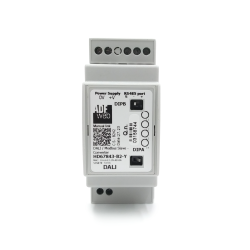
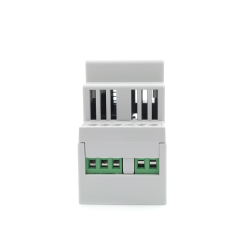
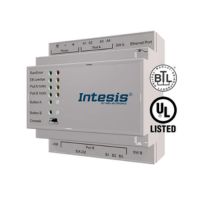
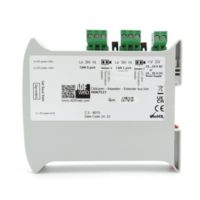
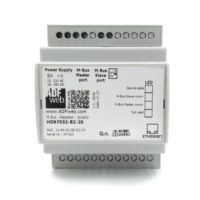
If a DALI system needs to integrate with other communication protocols such as Modbus, Ethernet or RS-485, it may be necessary to use DALI converters. These converters enable communication between DALI devices and other systems, allowing the creation of complex multi-protocol lighting installations. With converters, DALI can be easily integrated with other building automation systems, increasing system flexibility and interoperability.
4. Installation and configuration of DALI devices
After completing the wiring installation, it is necessary to move on to the installation of the DALI devices. Each device in the DALI system must be assigned a unique address to identify it on the network. When installing the devices, you should also configure the device groups and lighting scenes accordingly, which will allow you to synchronise the lighting in different parts of the building.
5. Testing the system
After the DALI devices have been installed and configured, the system should be tested. Checking that all devices are communicating correctly, and testing functions such as brightness control, on/off or sensor response, will help ensure that the system is working as intended.
Implementing the DALI protocol in a lighting system allows for a flexible and energy-efficient solution that can be easily expanded with new devices. With DALI converters, it is possible to integrate the lighting system with other technologies, increasing its functionality and making it easier to manage the entire installation.
8. Safety in DALI systems
Safety in DALI systems is a key aspect, especially in the context of intelligent buildings and large lighting installations where devices are networked. Although the DALI protocol does not include advanced built-in security features, there are a number of methods that can ensure that the system is protected from unauthorised access and interference:
1. Device authentication
To ensure that only authorised devices communicate on the DALI network, authentication mechanisms can be put in place that check the permissions of devices before they connect to the system.
2. Network isolation
Segregation of the DALI network through the use of separators, repeaters and opto-isolators allows the isolation of different segments of the system, reducing the risk of interference and allowing sensitive data to be separated from the rest of the network.
3. Network monitoring
Regular monitoring of the DALI network allows the detection of unauthorised access attempts or abnormal activities in the system. Network traffic analysis tools exist to help monitor the status of equipment and ensure system continuity.
4. Communication encryption
Although DALI does not natively support encryption, additional encryption mechanisms can be installed in more advanced systems to ensure the confidentiality of transmitted data, particularly in building management systems (BMS) and in integration with other protocols.
9. Comparison of the DALI protocol with other lighting protocols
The DALI protocol, although popular in lighting systems, is not the only solution. There are other protocols that are used for lighting management, such as 0-10V, DMX512, Zigbee or Z-Wave. Here is a comparison of DALI with some of these protocols:
| Feature | DALI | 0-10V | DMX512 | Zigbee |
|---|---|---|---|---|
| Communication Type | Peer-to-peer | Master-slave | Master-slave | Peer-to-peer |
| Brightness Control | Yes | Yes | Yes | Yes |
| Scalability | High | Limited | Medium | High |
| Integration with Other Systems | Yes | No | Yes | Yes |
| Transmission Speed | Up to 1 Mbps | None | Up to 250 kbps | Up to 250 kbps |
| Range | 300 m | Limited | 100 m | 100 m (extended with repeaters) |
The DALI protocol stands out for its great flexibility, especially in terms of integration with building management systems, while protocols such as 0-10V offer simpler solutions but with a smaller range of functions. DMX512, on the other hand, is more commonly used for artistic applications such as stage lighting, while Zigbee and Z-Wave are wireless protocols that offer greater mobility but with lower transmission speeds compared to DALI.
10 Summary
The DALI protocol is an advanced and flexible lighting management solution that enables precise control of lighting devices, energy savings and easy integration with building automation systems. With its extensive configuration options, DALI is ideal for commercial, industrial and smart buildings.
Although the DALI protocol offers a number of benefits, such as flexibility, energy savings and ease of integration, it can present some challenges, such as the need for appropriate infrastructure, integration with existing systems and the management of large networks of devices. Nevertheless, DALI remains one of the best lighting solutions available on the market.
11 FAQ - Frequently asked questions about the DALI protocol
1. What is the DALI protocol?
The DALI (Digital Addressable Lighting Interface) protocol is a communication standard used to control lighting in buildings. It allows precise control of brightness, on/off and monitoring of lighting devices within a single network.
2. What devices can be connected to a DALI system?
A variety of lighting devices can be connected to the DALI system, such as LED lamps, dimmers, motion sensors, control panels, as well as controllers that manage the entire DALI network.
3. How does the DALI system work?
The DALI system uses a bus to transfer data between devices. Each device is assigned a unique address which allows it to be controlled and monitored in real time. The DALI protocol allows for the flexible creation of groups of devices and lighting scenes.
4. What are the main advantages of DALI in lighting systems?
The main advantages of DALI are precise lighting management, flexibility to add new devices, energy savings and ease of integration with building automation systems.
.5. Is DALI compatible with other systems?
Yes, DALI is compatible with other systems such as building management systems (BMS), HVAC and energy monitoring systems, enabling full automation of building management.