
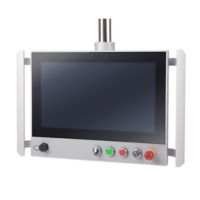
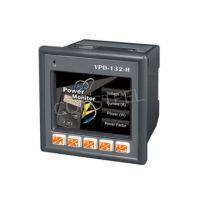



























Types of Industrial Touchscreens: Resistive vs Capacitive
Types of Touchscreens in Industry – Resistive or Capacitive? Conpanel PRO
In industrial automation, BMS and maintenance, the touchscreen can be just as important as the processor or the number of ports. It determines whether an operator can use a Panel PC while wearing gloves, whether the interface will remain stable in moisture and dirt, and whether an HMI application will respond predictably in production conditions.
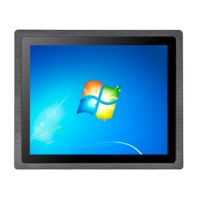
In practice, in a Panel PC you will primarily encounter two solutions: resistive touchscreens and capacitive touchscreens (PCAP). In the Conpanel PRO series and in the Consteel Electronics offer, we work with these technologies, because they most often win in industrial applications.
If your goal is to choose a Panel PC for gloves, washdown, front IP rating, screen size and workstation ergonomics, start with the category: industrial panel PCs.
And if you are looking for just a display for an existing computer, see: industrial touch monitors.
- What determines “good touch” in a Panel PC
- Resistive touchscreen – when it makes sense
- Capacitive touchscreen (PCAP) – comfort and multitouch
- Resistive vs capacitive – comparison table
- How to choose the type of touch for an industrial application
- What to look for in Panel PC and touch monitor specifications
- FAQ – the most common questions about touchscreens
What determines “good touch” in a Panel PC
In an office, most screens “work similarly”. In industry, the differences between touch technologies show up immediately. Before we compare resistive and capacitive, it is worth naming a few criteria that really affect everyday operation:
- Gloves and tools: whether the panel has to work with work gloves, a stylus, and sometimes even “anything”.
- Moisture and dirt: water drops, emulsion, dust, grease, washdown, and even condensation.
- Precision and ergonomics: whether the operator needs to hit a small button in the HMI, or rather move larger GUI elements.
- Multitouch: whether the application actually uses gestures (e.g., zoom, rotate, scrolling a map/screen).
- Front durability: resistance to scratches and wear during intensive use.
- Repeatable response: in industry, it matters that the “tap” behaves the same on Monday morning and after 12 hours of work.
That is why, when selecting an industrial panel PC, the choice of touch technology usually goes hand in hand with selecting the front IP protection rating, screen size, and mounting method. If you want to compare it quickly across products, in the category you can filter by touch type (capacitive/resistive) and IP: panel PCs.
Resistive touchscreen – when it makes sense in industry
A resistive touchscreen responds to pressure. Simply put: touch is registered when the user physically “presses down” on the surface. This approach has specific consequences that can be an advantage in a production environment.
The biggest advantages of resistive touch
- Works with gloves and with any “pointer” (stylus, fingernail, tool tip) – this is the classic reason why resistive still wins on the shop floor.
- Predictable response in situations where the operator has dirty hands or when the panel is used in a simple “press and confirm” rhythm.
- Good environmental tolerance in the context of minor contaminants on the front – fewer “surprises” from accidental touches.
- HMI operation without gestures – if the application has classic buttons and fields, multitouch is not required.
Limitations worth remembering
- Requires pressure – during long operator shifts it can be less comfortable than a light capacitive touch.
- The front layer may be more susceptible to mechanical wear compared to solutions with hardened glass in PCAP technology.
- Multitouch is usually not the strong point of resistive solutions – if the GUI is intended to use gestures intensively, capacitive will be the natural choice.
In summary: if in your application the key factors are gloves, simple HMI operation and a “sure tap”, a resistive touchscreen is still a very sensible technology in a Panel PC.
Capacitive touchscreen (PCAP) – comfort, speed and multitouch
A capacitive touchscreen (PCAP) is a technology known from consumer devices, but the industrial version is designed for stable operation in tougher conditions. Simply put: the panel responds to touch related to conductivity and a change in the field, not to pressure itself. Thanks to this, operation can be faster and more “lightweight”.
Why capacitive touch is so popular in modern Panel PCs
- High operating comfort – touch does not require pressure, which matters with frequent operator use.
- Multitouch – in practice it enables natural gestures and smooth control of the interface (e.g., zooming, scrolling, fast navigation between screens).
- Better visual experience – typically higher front clarity and a “sharper” feel of the interface.
- A good choice for modern GUIs – especially when the HMI design is more graphical and “touch-first” by definition.
Where capacitive may require attention
- Gloves: some work gloves perform well, others worse – it depends on the glove type and the touch controller settings.
- Water and droplets: in environments with high humidity or during washdown, you need to pay attention to stability and configuration (reducing accidental touches).
- Repeatability in a harsh environment: if the front is constantly dirty or wet, it may be worth considering whether the simpler “pressure-based” resistive model will be more predictable.
If you are aiming for a modern, fast GUI and want to use multitouch, a capacitive touchscreen in a Panel PC is most often the number one choice. In the panel PC category you can immediately filter devices by touch type: industrial panel PC.
Resistive vs capacitive – comparison table (practical, industrial)
The table below is not meant to show “what is better in general”, but what is better in a specific application. In industry, predictability, ergonomics and environmental resistance matter.
| Criterion | Resistive | Capacitive (PCAP) |
|---|---|---|
| Gloves | A very good choice, works predictably | Depends on gloves and controller, often works well, but it is worth checking |
| Stylus / tool operation | Yes, without any issues | Usually requires a suitable (conductive) stylus |
| Moisture and dirt | Often more predictable with a “dirty” front | Requires attention with droplets and washdown, in industry it can usually be handled well |
| Work comfort | Requires pressure, can be tiring with intensive use | Very high comfort, light touch |
| Multitouch | Most often not a priority | Yes, multitouch is the standard in modern applications |
| Hit accuracy | Good for point “taps” | Very good, especially with a modern GUI |
| Front durability | Depends on the build, with intensive work wear resistance matters | Usually very good, often with a harder front (glass) in industrial applications |
How to choose the type of touch for an industrial application (scenarios)
In practice, selection is easier when instead of “technology” you describe your working day: what you touch with, what is on your hands, what the front looks like after a week in a production environment, and whether the GUI uses gestures. Below are a few of the most common selection scenarios:
1) Working in gloves, dirt, dust, simple HMI
Most often the resistive screen wins, because it works predictably with gloves and “tougher” operation. If you are looking for a Panel PC for such an environment, filter by touch and IP in: industrial panel PCs.
2) Modern interface, fast work, scrolling, gestures
Here the natural choice is a capacitive screen (PCAP) with multitouch. This makes sense especially when the HMI application or visualization actually uses gestures.
3) Moisture, washdown, risk of accidental touches
In such an environment, it is not only touch that matters, but also the front and sealing. Capacitive can work great, but you need to consider real conditions (droplets, washdown). Resistive can be more “mechanically predictable”. It is worth assessing the front IP rating and device construction in the category: Panel PC IP65 and above.
4) I already have a computer, I only need a screen
If you do not want to replace the entire Panel PC, and you only need a touch display for the workstation, check industrial touch monitors. For project consistency, choose the touch technology (capacitive or resistive) for your working conditions.
What to look for in Panel PC and touch monitor specifications so touch is not the weakest link
In practice, touch problems rarely result only from the technology. More often the cause is environmental conditions and a mismatch of the entire device front. Therefore, when selecting an industrial panel PC or a touch monitor, check three things:
- IP protection rating: in production, IP65 front is often key, and in tougher conditions full IP depending on the construction and mounting method.
- Screen size and ergonomics: one screen makes sense for short “alarm confirmations”, another for long work in HMI/SCADA.
- Working conditions: temperature, dust, humidity, vibration and front cleaning method – these are the real factors that determine whether touch will be “reliable”.
If you want quick selection of devices by touch, IP and size, the easiest way is to use the filters in the categories: panel PCs and touch monitors.
FAQ – the most common questions about touchscreens in industry
Does a resistive touchscreen work with gloves?
Yes – this is one of its biggest advantages. It responds to pressure, so it is usually very predictable with work gloves.
Does a capacitive touchscreen work with work gloves?
Often yes, but it depends on the glove type and touch controller settings. In “heavy” environments it is worth verifying this before deployment.
Which is better with moisture and washdown?
It depends on the application. Resistive can be more mechanically predictable, while capacitive requires more attention with droplets and accidental touches.
Regardless of touch technology, the front IP rating and panel construction are very important.
Does multitouch make sense in HMI and SCADA?
It makes sense when the GUI uses gestures (e.g., fast scrolling, zooming, navigating between views). If the application is mainly buttons and confirmations, it is not critical.
Which touch should you choose for a shop floor where the operator has dirty hands?
Most often, the safe choice is resistive, because it works with gloves and “tougher” operation. If capacitive is required, it is worth verifying behavior in real conditions.
Where can I quickly compare available models?
The easiest way is to go to the category and use the filters:
industrial panel PCs
or
industrial touch monitors.
Resistive most often wins when gloves, a simple “tap”, and predictability in a production environment matter. Capacitive (PCAP) is great for modern interfaces, high operating comfort and multitouch. Ultimately, it is worth tying the choice to the front IP rating, screen size and the real working environment.
See available configurations and filter them by touch type: industrial panel PC.
If you want, we will select a solution for your application (gloves, moisture, IP, screen size): contact a Consteel Electronics expert.