



































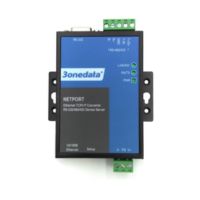
LoRaWAN Gateway – the foundation of intelligent IoT communication in industrial and building automation

LoRaWAN Gateway as the bridge between IoT and industrial systems
In the era of Industry 4.0 and the rapid expansion of the Internet of Things (IoT), reliable data communication between sensors, meters, and automation controllers has become the backbone of every efficient system. Among the many available technologies, LoRaWAN (Long Range Wide Area Network) stands out as one of the most flexible and cost-effective wireless solutions. At the heart of this ecosystem lies the LoRaWAN Gateway – a bridge that connects wireless end devices to industrial communication protocols and control systems.
A LoRaWAN gateway enables large-scale, long-distance data transmission without wiring. It collects signals from sensors deployed over wide areas, processes them in real time, and makes the information available in formats understood by BMS, SCADA, or PLC systems – including Modbus, BACnet, Profibus, Profinet, and MQTT.
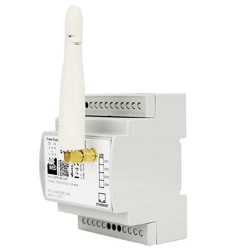
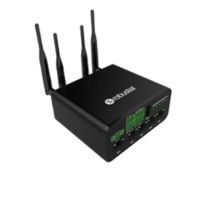
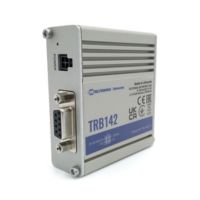
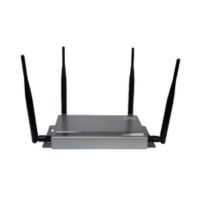
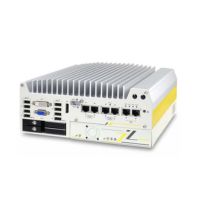
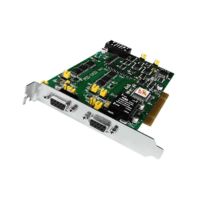
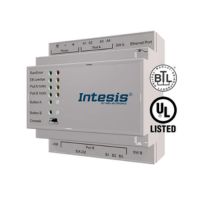
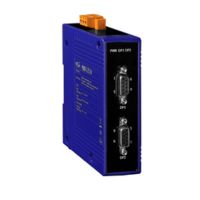
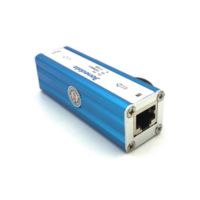
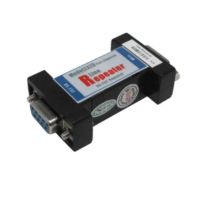
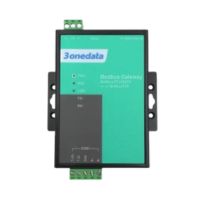
At Consteel Electronics, we provide advanced LoRaWAN converters and gateways designed for seamless integration between IoT networks and industrial automation. These devices can read data directly from LoRaWAN end nodes and convert them into standard industrial protocols – simplifying integration and reducing the need for separate network servers.
What is a LoRaWAN Gateway and how does it work?
A LoRaWAN Gateway acts as a mediator between LoRa end devices and the network layer. It receives low-power radio signals from sensors, transmits them to a network server or directly to a converter, and finally exposes the data to supervisory systems. This architecture allows hundreds of distributed devices to be monitored in real time, even across distances of several kilometers.
Depending on the project’s requirements, gateways can operate in two main configurations:
- Gateways integrated within industrial converters – the “all-in-one” solution where LoRa sensors communicate directly with the converter, which acts as a gateway and automatically converts data into protocols such as Modbus TCP/RTU, BACnet IP/MSTP, Profinet, or MQTT. This configuration is ideal for local applications without a separate network server
- Gateways cooperating with existing LoRaWAN networks – the converter connects to an existing gateway or network server, retrieves sensor data, and translates them into standard industrial communication formats for BMS, PLC, or SCADA systems
This dual-mode approach provides flexibility for both new deployments and existing infrastructures. It allows engineers to design networks that combine wireless scalability with industrial reliability.
Why LoRaWAN is becoming a key player in industrial communication
Originally developed for long-range, low-power IoT applications, LoRaWAN has proven to be highly suitable for industrial environments. It enables reliable wireless communication even in areas where Wi-Fi or GSM coverage is weak, and it supports thousands of devices while consuming minimal energy. This makes it ideal for monitoring and control systems where sensors are battery-powered or located in hard-to-reach areas.
Key advantages of LoRaWAN for automation and industry:
- Supports hundreds of devices in a single network
- Provides long-range communication (up to 10 km in open areas)
- Ensures low power consumption and multi-year battery life
- Uses advanced encryption (AES-128) for secure data transfer
- Offers cost-effective deployment and easy configuration
Combined with modern LoRaWAN gateways, this technology opens the door to massive industrial IoT (IIoT) ecosystems – connecting sensors, machines, and software across large facilities and infrastructures.
Real-world applications of LoRaWAN Gateways
LoRaWAN gateways and converters offered by Consteel Electronics are used across multiple industries and public infrastructure projects. Below are some of the most common use cases:
- Energy and water metering – remote reading of LoRaWAN meters, with data converted into Modbus or BACnet for BMS integration
- HVAC and climate control – monitoring air temperature, humidity, and CO₂ levels with LoRa sensors, and forwarding data to PLCs via MQTT or Profinet
- Precision agriculture – measuring soil moisture, temperature, and sunlight to optimize irrigation systems
- Smart cities – managing street lighting, parking, and air quality sensors within a unified municipal IoT network
- Manufacturing and logistics – monitoring machine status, warehouse temperature, and energy consumption across large plants
In all these scenarios, the LoRaWAN gateway serves as a reliable translator between IoT devices and the control layer, ensuring data consistency and real-time availability.
Integration with industrial communication protocols
The LoRaWAN converters from Consteel Electronics support the most widely used industrial standards, enabling direct interoperability between IoT sensors and automation systems:
- Modbus RTU/TCP – for integration with PLCs, power meters, and HMI panels
- BACnet IP/MSTP – for building management and HVAC applications
- Profibus and Profinet – for industrial control and production automation
- MQTT – for cloud-based data collection and IoT dashboards
This versatility means that LoRaWAN data can be displayed directly in SCADA, BMS, or cloud analytics platforms without additional middleware. Each converter can act as a standalone unit or as part of a distributed multi-gateway architecture, ensuring scalability and redundancy.
Best practices for implementing LoRaWAN Gateways
- Select the proper frequency band (868 MHz for Europe, 915 MHz for North America)
- Place the gateway in a location with minimal physical obstacles and strong signal coverage
- Configure device keys (DevEUI, AppEUI, AppKey) carefully to maintain security and network stability
- Ensure that the converter supports the same class and data rate as your sensors (Class A/B/C, SF7-SF12)
- Monitor RSSI and SNR values regularly to optimize link performance
Proper network design and gateway placement have a decisive impact on system reliability. Using industrial-grade gateways and converters ensures robust communication, even in noisy environments with electromagnetic interference.
Technical challenges and the future of LoRaWAN in industry
While LoRaWAN offers tremendous potential, large-scale industrial deployments present several technical challenges, including network capacity, latency, and data security. However, the continuous evolution of gateway technology and network servers, as well as the integration of LoRaWAN with Ethernet and 5G infrastructures, are rapidly overcoming these barriers.
In the coming years, LoRaWAN is expected to play an even greater role in:
- Predictive maintenance – collecting vibration and temperature data from machines to anticipate failures
- Energy efficiency management – optimizing HVAC and lighting systems in commercial buildings
- Asset tracking and logistics – real-time location tracking across large industrial zones
- Integration with AI and analytics – using LoRaWAN data for automated decision-making
Why choose LoRaWAN converters from Consteel Electronics
A LoRaWAN Gateway is not just a technical component – it is the foundation of a scalable and future-proof IoT ecosystem. By choosing Consteel Electronics LoRaWAN converters, integrators and system designers gain access to a proven portfolio of devices designed for industrial environments.
Our converters combine robust hardware design, extended operating temperature ranges, and full compliance with industrial protocols. They enable engineers to deploy LoRaWAN networks that seamlessly exchange data with Modbus, BACnet, Profinet, or MQTT-based systems – both on-premises and in the cloud.
Whether you need a compact device with a built-in gateway or an advanced model working within an existing LoRaWAN infrastructure, our products offer the flexibility, security, and performance required for today’s industrial applications.
Conclusion – building the bridge between IoT and industry
The role of the LoRaWAN Gateway extends far beyond data transmission. It represents a new era of wireless industrial integration – connecting sensors, controllers, and analytics platforms into one intelligent ecosystem. With LoRaWAN, data becomes accessible from virtually anywhere, enabling smarter control, predictive insights, and real operational efficiency.
To explore how LoRaWAN technology can transform your facility or project, visit our dedicated category page and discover our full range of industrial LoRaWAN converters and gateways.