






























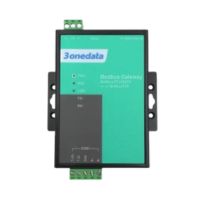
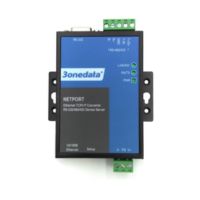
LoRaWAN gateway – reliable wireless communication for IoT and industrial automation
A LoRaWAN gateway is the essential component of every LPWAN (Low Power Wide Area Network) infrastructure, enabling long-range communication between wireless sensors and the cloud or supervisory systems. Thanks to high sensitivity, robust modulation and low power consumption, LoRaWAN is ideal for smart metering, building automation, energy management and industrial IoT applications. In this article we explain how gateways work, which parameters matter in professional deployments, and how to choose the right model from our LoRaWAN converters and gateways.
What is a LoRaWAN gateway?
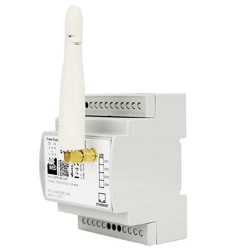
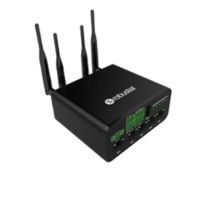
A LoRaWAN gateway is a device that receives data packets from multiple LoRa end nodes (sensors, meters, controllers) and forwards them via Ethernet, cellular or Wi-Fi to a network server or application. Unlike simple point-to-point LoRa modems, gateways support thousands of devices simultaneously and form the backbone of public or private IoT networks. They operate in license-free frequency bands (typically 868 MHz in Europe) with ranges up to several kilometers, making them suitable for wide-area deployments such as smart cities, utilities, agriculture and industrial monitoring.
Key selection criteria for LoRaWAN gateways
- Frequency band: 868 MHz (EU), 915 MHz (US), or multi-band models for global use.
- Channel capacity: 8, 16 or more channels depending on required throughput.
- Backhaul: Ethernet, 4G/LTE, Wi-Fi – single or redundant connections.
- Form factor: DIN-rail housing for cabinets, outdoor IP67 enclosures for field installations.
- Protocols: MQTT, Modbus, BACnet or HTTP integration with SCADA/BMS and cloud.
- Power supply: wide DC range, PoE support for flexible installation.
- Management: remote provisioning, firmware updates, security (TLS/SSL, VPN).
Industrial applications of LoRaWAN gateways
In industry and building automation, LoRaWAN gateways are used to integrate distributed devices where wired connectivity is too costly or impractical. Typical use cases include smart metering (water, gas, heat), monitoring of HVAC equipment, predictive maintenance with wireless sensors, and agricultural IoT such as soil and crop monitoring. With support for protocols like MQTT, LoRaWAN gateways can easily connect to cloud platforms or local SCADA and BMS systems, enabling real-time decision making and advanced analytics.
Benefits of choosing professional LoRaWAN gateways
- Reliable long-range communication with thousands of devices.
- Low power consumption, ideal for battery-powered sensors.
- Flexible integration with industrial protocols and IT systems.
- High resistance to interference and secure data transmission.
- Scalability – from single-building projects to nationwide networks.
Evaluate before deployment – free testing program
Unsure which LoRaWAN gateway will fit your project? Take advantage of our free device testing program. You can request demo units, test them in your real environment, and verify coverage, integration and performance before making a purchase decision.