














Wireless and wired meter reading using the LoRaWAN protocol

Wireless and wired meter reading using the LoRaWAN protocol
The digitalization of measurement systems has become one of the key directions in the development of modern industrial, municipal, and commercial installations. Rising costs of energy, water, and gas, combined with the need for precise monitoring of media consumption, are driving the growing popularity of the LoRaWAN protocol. This technology enables remote meter reading in both wireless and wired installations, offering a very wide range (in urban, densely built-up areas from 2 to 5 km, and in less dense or suburban areas from 15 up to even 20 km) while maintaining minimal power consumption.
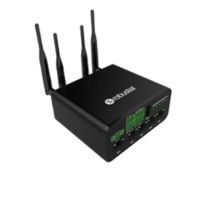
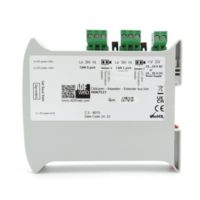
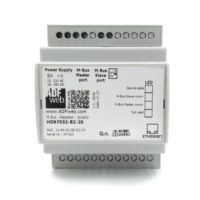
Today, LoRaWAN is widely used in Smart Metering systems, Smart City projects, building management systems (BMS), and industrial applications. By using appropriate devices, such as the LoRaWAN protocol converter HD67D03-B2-868MHz, it is possible to integrate existing wired meters into a modern wireless radio network.
What is LoRaWAN?
LoRaWAN (Long Range Wide Area Network) is an open communication protocol designed for building large-scale IoT networks with very low power consumption. The standard is developed and certified by the LoRa Alliance, which ensures interoperability between devices from different manufacturers.
The LoRaWAN protocol is based on LoRa modulation, which allows the transmission of small data packets over very long distances. In practice, this means that electricity, water, gas, or heat meters can transmit data to a supervisory system without the need for cabling, SIM cards, or costly cellular networks.
A key feature of LoRaWAN is its extremely low power consumption. End devices, such as measurement modules or meters, can operate on battery power for several or even more than ten years, significantly reducing operating costs.
What is the maximum operating range of the LoRaWAN protocol?
One of the main reasons for the popularity of this technology is the impressive LoRaWAN range. Depending on the operating environment, transmitter power, and network configuration, the maximum operating range of the LoRaWAN protocol can reach:
- up to 2–5 km in dense urban environments,
- 10–15 km in suburban areas,
- even 30–40 km in open rural or industrial areas.
Such a wide range means that a single LoRaWAN gateway can support hundreds or even thousands of measurement devices. In the context of meter reading, this allows entire residential districts, industrial facilities, or extensive water distribution networks to be covered by a single system.
Which frequencies are used in the LoRaWAN system?
The LoRaWAN system operates in unlicensed ISM (Industrial, Scientific and Medical) frequency bands, the availability of which depends on the region of the world. In Europe, including Poland, the standard frequency band is 868 MHz.
- 915 MHz – North America,
- 433 MHz – selected specialized applications,
- 923 MHz – parts of Asia.
The use of unlicensed frequency bands means there are no subscription fees for data transmission. This is a major advantage of LoRaWAN over cellular technologies, especially in projects involving a large number of meters and measurement points.
What is the effective LoRaWAN range in practice?
Although questions about LoRaWAN range often focus on maximum values, in practice the effective working range is what matters most. This depends on many factors, such as:
- type of building structures (concrete, steel, basements),
- antenna installation height,
- level of radio interference,
- LoRaWAN device class (A, B, or C).
In meter reading systems, LoRaWAN performs very well in challenging conditions, such as basements, water meter chambers, or electrical switchrooms. Thanks to the high sensitivity of receivers, stable data transmission is possible even from locations inaccessible to other wireless technologies.
Wired meter reading using LoRaWAN converters
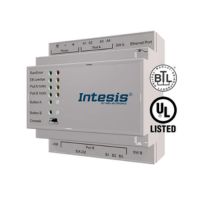
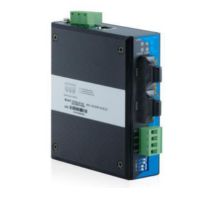
In many facilities, meters with wired outputs such as M-Bus, Modbus RTU, or S0 pulse outputs are still in operation. In such cases, an ideal solution is a LoRaWAN protocol converter, such as HD67D15-B2-868MHz-80.
This type of device acts as a bridge between a traditional wired meter and a wireless LoRaWAN network. The converter collects data from the meter and then periodically transmits it via radio to a supervisory system or cloud platform. This makes it possible to modernize existing infrastructure without replacing meters, significantly reducing investment costs.
Why choose LoRaWAN for measurement systems?
The LoRaWAN protocol is currently one of the most effective solutions for remote meter reading. It offers a very long range, low power consumption, and the ability to integrate both wireless and wired devices through LoRaWAN protocol converters.
Thanks to its flexibility and scalability, this technology is ideally suited for Smart Metering projects, building automation, and industrial applications. Investing in LoRaWAN is not only a way to reduce operating costs, but also a solid foundation for further digitalization and real-time analysis of media consumption data.