



































Panel PCs in PLC Integration: Key Solutions for Modern Production Lines

Panel PCs in PLC Integration: Key Solutions for Modern Production Lines
In the era of digital industrial transformation, PLC (Programmable Logic Controller) integration with panel PCs has become the foundation of effective process management, visualization, monitoring, and automation. Panel PCs combine an operator interface with computing power in a single device, ensuring reliability and ergonomic operator work on the production line. Discover the importance of panel PCs in the context of PLC integration, their characteristics, benefits, challenges, and practical guidelines for their purchase.
What is a panel PC and why is it important in PLC integration
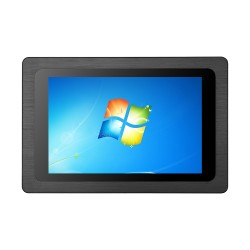
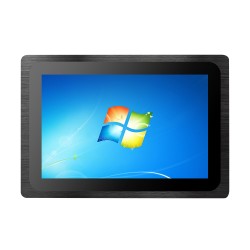
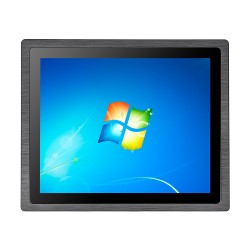
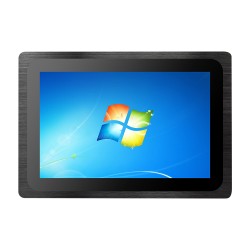
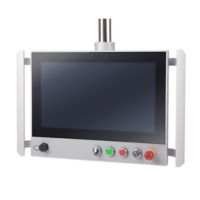
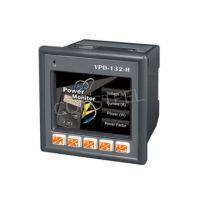
Definition: a panel PC (Panel PC) is an integrated computer with a touchscreen, designed to operate in an industrial environment. In the context of PLC integration, it serves as an HMI (Human-Machine Interface), a visualization system, and a central point for launching and monitoring PLC-controlled applications.
Broader context: in a production line, the PLC controls processes and logic, while panel PCs present data, enable configuration, allow operator interaction, and perform local edge data processing. This makes it possible to detect anomalies faster, simplify diagnostics, and reduce downtime.
Key technical features of a panel PC for PLC integration
Housing and durability: steel or aluminum housing, IP65/IP67 protection classes, resistance to vibration and shock; operating temperature range often from -20°C to 60°C.
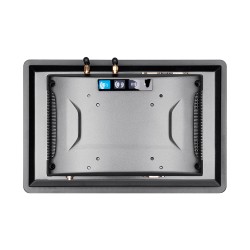
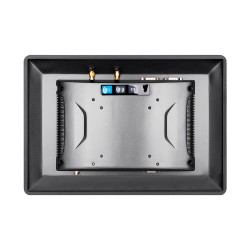
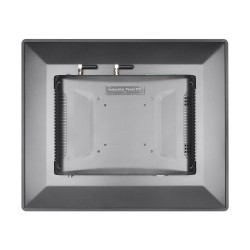
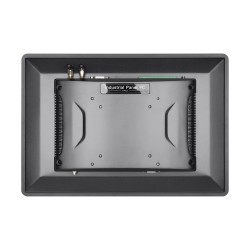
Screen and interfaces: high-brightness touchscreen (panel LCD/LED), ability to work in industrial conditions (anti-glare, scratch resistance). Interfaces: RS-232/RS-485, industrial Ethernet, CAN, USB, PCIe/M.2, and optionally built-in WLAN/WWAN modules.
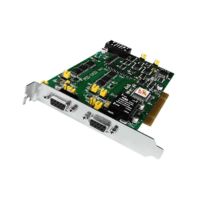
I/O connectors and expandability: slots for I/O modules, the ability to install additional PCIe/PCI cards, support for graphics cards for 3D visualization and real-time computing.
Power supply and reliability: redundant power supply, hot-swappable capability, watchdog function, TPM/secure boot, OTA update mechanisms, and protection against data loss.
Operating system and software: support for Windows Embedded/IoT, industrial Linux, SCADA/HMI environments (Ignition, Wonderware, WinCC), and containerization (Docker) for isolated PLC and visualization applications.
Computing performance: low-power processors, GPU/VPU options for image analysis and edge AI, RAM and storage with redundancy (RAID, SED) for uninterrupted operation.
Applications of a panel PC in PLC integration
Process visualization and HMI: an intuitive operator interface with diagrams and alarms, quick access to trends and historical data.
Diagnostics and predictive diagnostics: local event logging, PLC status monitoring, real-time deviation detection, and the ability to launch service procedures directly from the panel.
MES/ERP integration: retrieving production data, generating reports, entering operator data into ERP systems, and uploading data to the cloud in limited configurations.
Edge computing for automation: local aggregation of sensor data, preliminary filtering, and quality control and sorting algorithms at the network edge.
Machine vision: processing images from industrial cameras for quality inspection, identifying element positions, and correcting the process in real time.
Security and compliance: secure launching of SCADA applications, data encryption, OTA updates, and compliance with industry standards (IEC 62443, ISA/IEC 62443).
Challenges and practical tips when selecting a panel PC for PLC integration
Working environment: selecting a protective housing and cooling system suited to temperature and humidity; vibrations and dust affect reliability.
Reliability and service: device life cycle length (LTV), spare parts availability, and manufacturer service policies; it is worth considering models with a 5–7 year warranty.
Compatibility with PLCs and industrial protocols: ensuring compliance with communication standards (OPC UA, Modbus TCP/RTU, EtherCAT, PROFINET, CANopen); configurable control and the ability to operate in distributed architectures.
Cybersecurity: secure boot, TPM, application isolation, OTA security updates; network segmentation and limited operator access.
Total cost of ownership (TCO): purchase cost together with installation, maintenance, energy, and service downtime; consider the option of modular upgrades instead of replacing the entire unit.
Operating system selection: Windows IoT/Embedded may better support SCADA applications and ease of integration with Windows environments, while industrial Linux offers greater stability and flexibility for custom solutions.
Practical recommendations for configuration and implementation
Architecture planning: define the role of the panel in the overall PLC architecture — whether it is a local HMI, an IIoT gateway, or a data processing point. Determine which data is needed locally and which should be sent to the cloud.
Design PLC interfaces: make sure the panel PC supports the selected communication protocols (Modbus/TCP, OPC UA, EtherNet/IP, etc.) and has a sufficient number of ports as well as protocol conversion capability.
Testing in the production environment: data simulation and load tests in conditions close to real ones; OTA update tests in a safe environment.
Diagnostics and logging: configure a log center, track trends, alarms, and alarm outputs. Consider local data processing to reduce traffic in the corporate network.
Security at the implementation stage: implement access policies, restrict operator permissions, monitor sessions and events, and use trusted firmware sources.
Configuration examples and models to consider
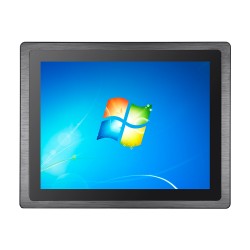
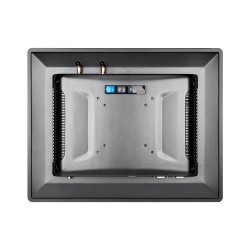
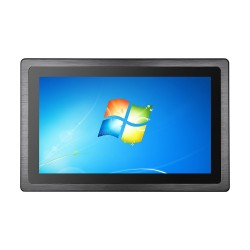
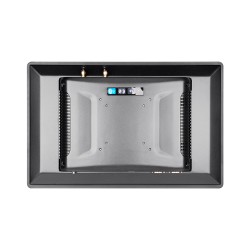
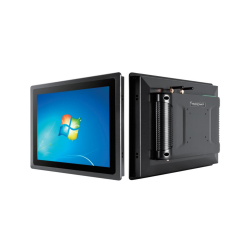
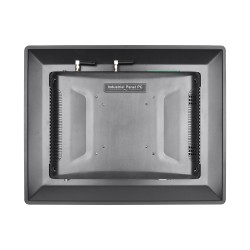
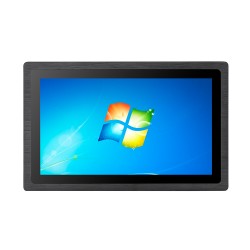
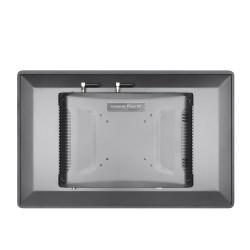
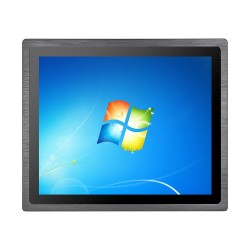
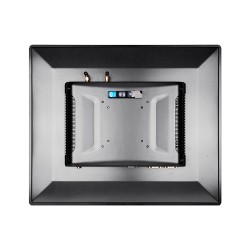
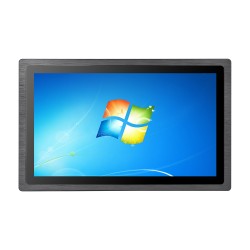
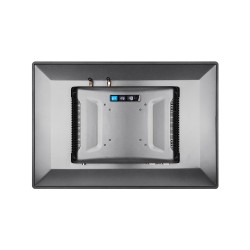
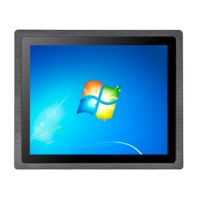
An industrial panel PC series model (e.g. 15–21.5 inch, resistive/capacitive touch), with an Intel Core/i5-I7 processor depending on computing needs, redundant power supply, graphics card capabilities for machine vision, and dual NVMe drives for data redundancy.
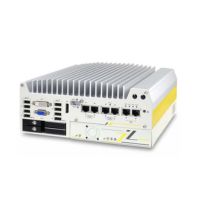
A rack-mount box PC with dedicated I/O modules, capable of integration with industrial CAN/Ethernet modules, often with passive cooling and a fanless option for quieter operation.
A DIN-rail PC for modernization of existing lines: a compact unit mounted on a DIN rail, with a wide range of interfaces and easy PLC integration.
Summary
In summary, panel PCs are a central element in PLC integration architecture. Thanks to HMI integration, edge data processing, and flexible communication interfaces, a panel PC accelerates operational decisions, reduces downtime, and enables advanced process diagnostics. When choosing a panel PC, it is worth focusing on durability, interface range, support for industrial protocols, security, and a long product life cycle. Among manufacturers, it is worth paying attention to update support, spare parts availability, and integration capabilities with the selected SCADA/ERP environment.