
































Why does the air conditioning not respond to remote control via BMS?

- No native communication: the “language” barrier between systems
- Incorrect addressing and network conflicts
- Physical damage to the communication bus
- Control priority issue (Local vs Remote)
- No power supply to communication modules
- How to solve the most common AC issues using Intesis modules from Consteel Electronics?
- Invest in reliability with Consteel Electronics
Why is the air conditioning not responding to remote control from the BMS?
In modern commercial and industrial buildings—from office complexes to contemporary hotels, warehouses, or production halls—the Building Management System (BMS) is the operational “brain” of the facility. However, even in the most advanced installations, facility managers encounter a frustrating issue: AC indoor units do not respond to commands sent from the central system.
If your HVAC system does not respond to BMS signals, the reasons can be both straightforward and deeply technical. Understanding why communication fails is key to regaining control over the building’s energy efficiency. Learn about the most common issues behind communication loss and simple ways to fix them.
No native communication: the “language” barrier between systems
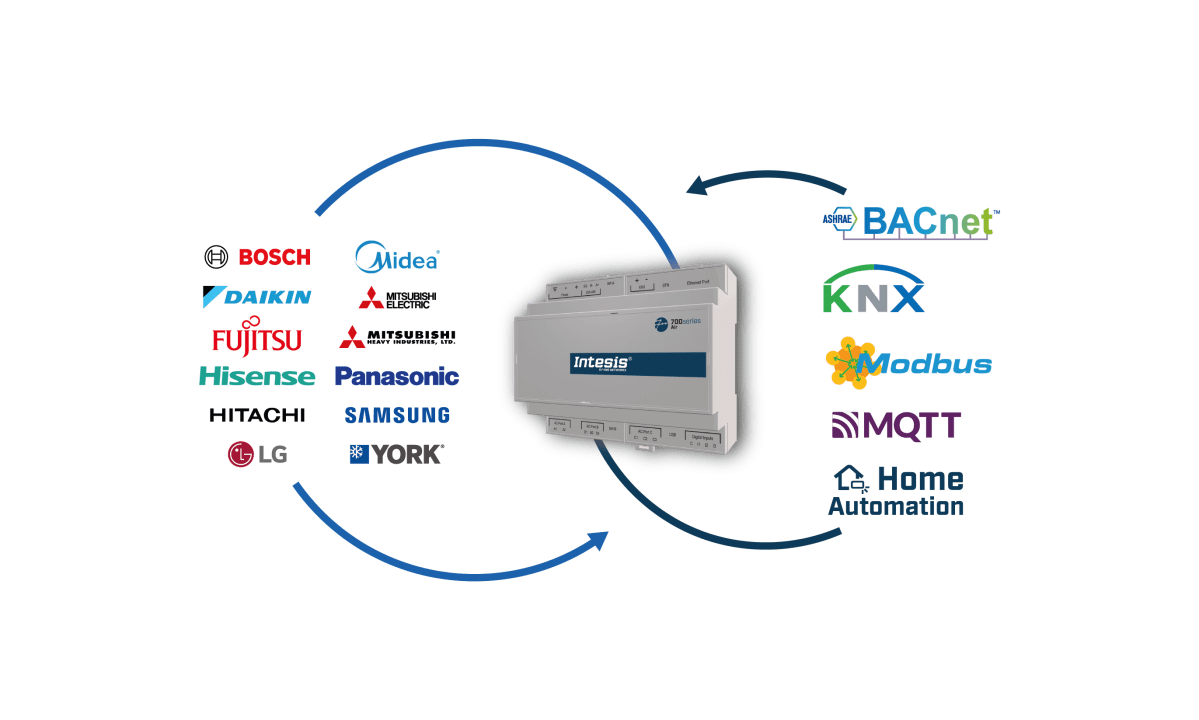
The most common reason why air conditioning does not respond to remote control is the difference in communication protocols. Most AC manufacturers (Daikin, Mitsubishi Electric, LG, Samsung, Panasonic) use proprietary, closed internal protocols. Meanwhile, BMS systems typically operate on open standards such as BACnet, Modbus, KNX, or LonWorks.
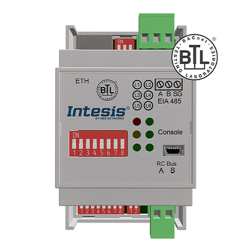
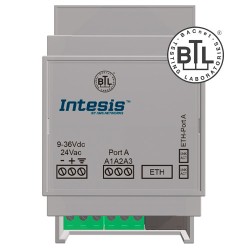
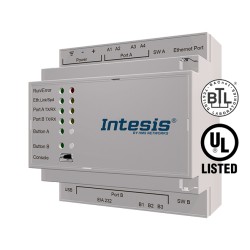
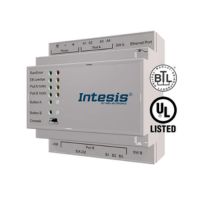
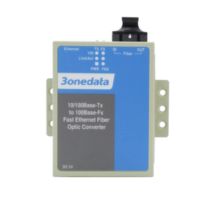
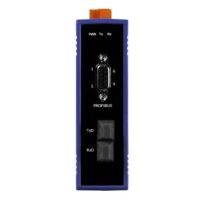
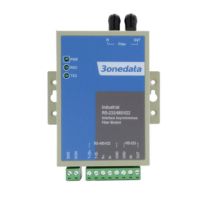
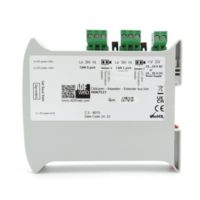
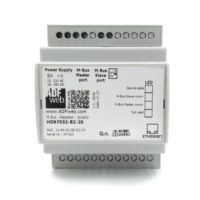
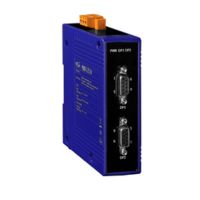
Without the right “translator,” the BMS tries to communicate with the air conditioner using a protocol it does not understand. This is exactly where Intesis communication gateways and protocol converters play a key role.
These solutions, supplied by Consteel Electronics, work like an advanced interpreter—translating Modbus or BACnet commands into the native language of a specific AC manufacturer.
Incorrect addressing and network conflicts
In large installations, where hundreds of indoor units operate within one facility, addressing errors are very common. If an air conditioning unit has an incorrectly assigned physical or logical address, the BMS request will end up in a “void.”
- Address conflict: Two devices with the same address in a Modbus network will cause communication chaos.
- Incorrect BACnet instance configuration: In BACnet, each gateway must have a unique identifier (Object Instance). If the installer forgets this, remote control will be impossible.
Intesis gateways eliminate this issue thanks to intuitive Intesis MAPS software, which enables quick diagnostics and correct signal mapping even before the final system commissioning.
See how to configure M-Bus gateways using Intesis MAPS
Physical damage to the communication bus
Construction and modernization projects are often carried out under time pressure. In such cases, the lack of AC response is typically caused by wiring issues:
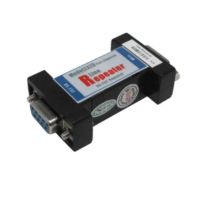
- Bus too long: Exceeding the maximum cable length for the RS485 standard without using repeaters.
- No termination: Missing end resistors at the ends of the communication line, which causes signal reflections and data errors.
- Electromagnetic interference (EMI): Routing communication cables next to power cables without proper shielding.
Control priority issue (Local vs Remote)
It often happens that the AC unit “sees” the BMS signal but ignores it because the wall controller (wired remote) has priority, or the system is locked in a master mode.
Some AC units require setting a “Slave” or “Remote” mode to accept commands from external gateways. By using advanced Intesis gateways, the user can define priorities—for example, restricting occupants from changing the setpoint during peak energy hours, which is crucial for cost optimization in large enterprises.
No power supply to communication modules
This seems obvious, but in real-world service scenarios it is a frequent cause of failure. Modules that integrate air conditioning with a BMS (e.g., BACnet/IP gateways) require stable power. If a module installed near an indoor unit loses power, the unit becomes “invisible” to the BMS—even though the air conditioner itself may still work properly when controlled via the remote.
How to solve the most common AC issues using Intesis modules from Consteel Electronics?
Intesis specializes in creating interfaces that eliminate the issues above and provide stable communication between the BMS and AC units. Why it is worth investing in them:
-
Wide compatibility
Whether your building uses Toshiba VRF systems or Fujitsu split units, Intesis offers dedicated Plug-and-Play solutions. This means the gateway is factory-prepared to work with a specific air conditioner main board. -
Two-way communication
Many low-cost alternatives provide only one-way control. Intesis solutions offered by Consteel Electronics ensure full, bidirectional communication. This means that in the BMS you can see not only the setpoint you sent, but also:- Actual room temperature.
- Error codes (crucial for service teams where response time matters).
- Filter status.
- Power consumption (in selected models).
-
Ease of deployment
Many older buildings are currently undergoing digital transformation. Intesis gateways enable older air conditioners to be integrated into modern BMS networks without replacing entire AC units. This brings major savings and a real reduction in overall project cost.
Key parameters for designing and integrating HVAC systems with building automation (BMS).
| Parameter | Value | Description |
|---|---|---|
| Operating temperature | approx. −10…+50 °C | Temperature range in which the module can operate continuously under typical installation conditions. |
| Storage temperature | approx. −20…+70 °C | Permissible temperature conditions during transport and storage of the device. |
| Power supply | 24 V AC / DC | Standard supply voltage used in HVAC installations and building automation systems. |
| Power consumption | approx. 2–5 W | Low power consumption enables easy integration into existing supply circuits in a control cabinet. |
| Relative humidity (non-condensing) | up to 90 % RH | Device designed for operation in typical technical rooms and control cabinets. |
| Enclosure protection rating | IP20 | Intended for installation inside a control cabinet or distribution board. |
| Installation environment | Indoor | Module intended for installation in a dry indoor environment, in accordance with the manufacturer’s requirements. |
Invest in reliability with Consteel Electronics
Problems with AC units not responding to BMS control most often result from attempts to save money on the quality of communication interfaces. Choosing professional Intesis solutions guarantees HVAC stability, which—amid steep electricity price increases—is a key element of any facility’s management strategy.
A correctly configured system built on reliable components from Consteel Electronics can reduce operating costs by up to 30% thanks to intelligent algorithms that switch off equipment in unused zones and precise monitoring of utility consumption. Don’t let communication errors generate losses in your building. Our team of experts will help you select the right Intesis gateways for your air conditioning fleet.
Learn more and download the product catalog by CLICKING HERE
Contact us today and make your building truly smart!