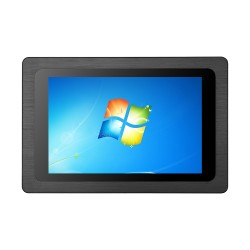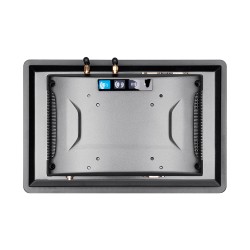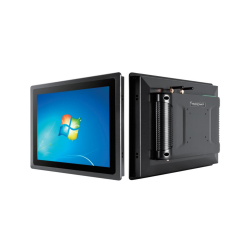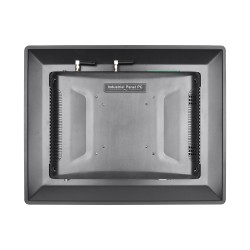




































Industrial Panel PC applications in different sectors

The use of computers in industry continues to grow as production, automation and logistics increasingly require reliable 24/7 operation, real-time data visualization and seamless communication with machines. In practice, an “industrial computer” is not only a computing unit, but often a complete operator workstation (HMI/SCADA) with a touch display designed to withstand dust, moisture and vibration.
What does the use of computers in industry mean in practice?
Quick answer
Industrial computers are used for process visualization (HMI/SCADA), machine monitoring and control, production data logging, operator terminals and communication with automation systems (Ethernet, RS485, USB, CAN). Most environments use industrial PCs and panel PCs designed for continuous 24/7 operation.
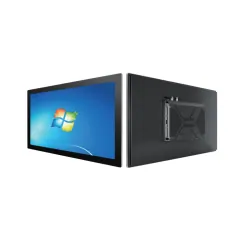
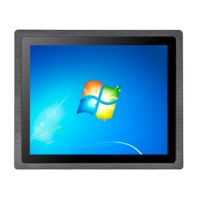
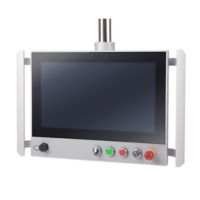
Unlike office computers, industrial devices must operate reliably in production environments with dust, vibration, temperature variations and possible exposure to water or cleaning agents. For operator workstations, companies typically choose industrial panel PCs, which combine durability with intuitive touch control.
Common industrial computer applications
- Process visualization & monitoring – real-time data, alarms, trends and machine status.
- Production data logging – OEE reports, traceability and quality tracking.
- Automation integration – communication with PLCs and peripheral devices.
- Quality control stations – measurement systems and machine vision.
- Maintenance & diagnostics – system monitoring and quick service response.
- Operator control stations – ergonomic touch interfaces for machine operation.
HMI/SCADA operator stations
In HMI/SCADA environments, computers serve as the central interface for operators. They display visualizations, alarms, process trends and recipes, enabling faster decision-making and improved production control.
For industrial environments exposed to dust or water, consider models with an IP65 front. In hygienic or wash-down areas, stainless steel solutions may be required: stainless steel panel PCs.
Logistics and warehouse environments
Industrial computers support picking, barcode/RFID identification, material flow tracking and packaging stations. Reliability and readability are critical because workstation downtime directly impacts delivery performance.
Food and pharmaceutical industries – hygiene & durability
In hygienic environments, computers must withstand frequent wash-downs and cleaning chemicals. Proper enclosure design, sealing and material selection are essential to maintain hygiene and durability.
How to choose a computer for industrial use
Selection checklist
- Environment: dust, moisture, wash-down, chemicals, vibration.
- Operating mode: 24/7 operation and workload.
- Touch & ergonomics: glove operation, brightness and usability.
- Interfaces: connectivity for automation and peripherals.
- Mounting: panel mount, VESA or operator arm.
If you need help selecting the right solution, start with: industrial panel PCs and choose a model suited to your environment and application.
FAQ – Industrial computer applications
What are industrial computers mainly used for?
They are used for process monitoring, HMI visualization, data logging, and operator control stations.
How are industrial computers different from office PCs?
Industrial models are designed for continuous operation and harsh environments.
When should I choose a panel PC?
Panel PCs are ideal when a touch operator interface is required directly at the machine.
Do industrial environments require touchscreens?
Not always, but touch interfaces improve ergonomics and speed of operation.
What factors matter most when selecting an industrial computer?
Environmental conditions, reliability, connectivity and mounting options are key.