

























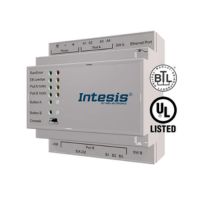









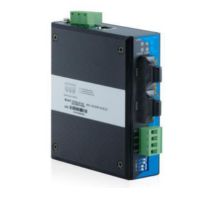
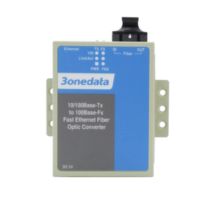
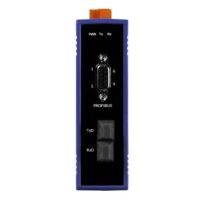
Which converter should I choose to connect Modbus RTU to Modbus TCP?

Table of contents
- Modbus RTU, Modbus TCP and a different communication layer
- Who is the master and who is the client?
- Transparent gateway or converter with register mapping?
- Number of Modbus RTU devices and RS-485 bus parameters
- Modbus TCP - client or server and the number of connections
- Galvanic isolation and industrial resistance
- Diagnostics more important than price
- When is a simple converter enough, and when is an industrial gateway needed?
- Example 1: SCADA over Ethernet reads Modbus RTU meters
- Example 2: an old Modbus RTU PLC needs to read a new Ethernet device
- Example 3: many RTU devices, one BMS system
- Most common mistakes when choosing a Modbus RTU to Modbus TCP converter
- How to choose a Modbus RTU to Modbus TCP converter? Step by step
- Which converter should you choose?
Choosing a Modbus RTU to Modbus TCP converter seems simple only at first glance. In practice, it is not enough to check whether the device has an RS-485 port and Ethernet. The key is to determine who initiates communication, on which side the supervisory device is located, how many devices are to operate on the serial bus, what the requirements are for register mapping, response time, isolation, diagnostics and stable operation in an industrial environment.
To connect Modbus RTU with Modbus TCP, you need to choose a Modbus protocol converter that supports the Modbus RTU variant on the serial side, usually RS-485, and operates as a Modbus TCP client or Modbus TCP server on the Ethernet side. The choice of a specific model depends on the system architecture, meaning whether the PLC controller, SCADA or BMS system is supposed to read RTU devices, or the other way round. Generally speaking, the existing Modbus RTU master is supposed to communicate with a device or system over Modbus TCP.
Modbus RTU, Modbus TCP and a different communication layer
Modbus RTU and Modbus TCP use a similar data exchange logic: device addresses, Modbus functions, registers, coils, discrete inputs and input registers. The difference lies mainly in the transport layer.
Modbus RTU usually works over RS-485 or RS-232. This is serial communication in which devices operate on a common bus, with a defined transmission speed, parity, number of stop bits and slave address. A typical Modbus RTU installation includes one master and multiple slave devices connected to one RS-485 line.
Modbus TCP works over Ethernet, most often through an RJ45 connector. In this variant, communication takes place in an IP network, and devices are identified by an IP address and TCP port, usually 502. Instead of the classic master/slave terminology, the terms client/server are often used, but the practical rule remains similar: one side initiates the request and the other side responds.
A Modbus RTU to Modbus TCP converter is therefore not a simple adapter; it is a device that must correctly interpret Modbus frames on one side and expose them in the appropriate form on the other side.
Who is the master and who is the client?
The first and most important step when choosing a converter is to determine which device initiates communication. In automation projects, the most common mistake is that the user searches for a “Modbus RTU to TCP converter”, but does not specify whether they need a variant such as:
- Modbus TCP client to Modbus RTU slave,
- Modbus TCP server to Modbus RTU slave,
- Modbus RTU master to Modbus TCP server,
- Modbus RTU slave to Modbus TCP client/server,
- or a converter with full data mapping between the two sides.
The most common case is as follows: a SCADA system, PLC controller or industrial computer operates in an Ethernet network and needs to read data from energy meters, temperature controllers, frequency inverters, power network analyzers or other Modbus RTU devices. In this situation, a gateway is most often needed: on the Ethernet side it provides Modbus TCP communication, and on the RS-485 side it polls Modbus RTU devices.
Another case occurs when an existing PLC controller has only an RS-485 port and works as a Modbus RTU master, while a new device is available only over Ethernet as a Modbus TCP server. Then a converter working in the opposite direction is required: from the PLC side it behaves like a Modbus RTU slave device, and from the Ethernet side it communicates with the Modbus TCP server.
This distinction is critical. Two converters may have identical connectors, a similar housing and a similar description, but differ in protocol role. If the role is selected incorrectly, the devices will be physically connected, but data exchange will not start.
Transparent gateway or converter with register mapping?
The second important question when selecting a device is whether a simple transparent gateway is needed or a device with data mapping.
A transparent Modbus RTU to Modbus TCP converter forwards requests between Ethernet and the serial bus. It is a good choice when the supervisory system itself knows which device addresses and registers it needs to poll. A good example is when SCADA sends a Modbus TCP request to the converter’s IP address, indicates the Unit ID corresponding to the RTU device, and the gateway forwards the request to RS-485.
A converter with register mapping is more advanced. It can cyclically poll devices on one side, store data in its memory and make it available on the other side as an ordered register map. This model is better when the application requires:
- combining data from many RTU devices,
- changing register addressing,
- time separation between a slow RS-485 bus and a faster Ethernet network,
- communication with several TCP clients,
- a stable data map for PLC or SCADA,
- conversion of data types, byte order or word order.
In simple applications, a transparent gateway is enough. In industrial systems, BMS, energy applications, metering installations and larger SCADA systems, it is safer to choose a converter with a configurable data exchange table.
Number of Modbus RTU devices and RS-485 bus parameters
If the converter is to work with many Modbus RTU devices, it is necessary to check not only the maximum number of supported slaves, but also the practical limitations of the bus.
Important parameters include:
- number of devices on RS-485,
- Modbus slave addresses,
- transmission speed, for example 9600, 19200, 38400, 57600 or 115200 bps,
- parity, number of data bits and stop bits,
- cable length,
- bus topology,
- termination at the ends of the line,
- shielding and cable routing,
- presence of electromagnetic interference,
- response time of individual devices.
Modbus RTU is sequential. This means that the master polls devices one after another. Even if communication on the Ethernet side is fast, the whole system will be limited by the slowest section, which is usually RS-485. With a large number of devices and many registers polled every second, timeouts, polling intervals and the number of requests must be selected very carefully. A good converter should allow configuration of serial port parameters, timeouts, delays between requests and the number of transmission retries. Otherwise, one poorly responding unit can slow down the entire bus.
Modbus TCP - client or server and the number of connections
On the Ethernet side, it is necessary to check whether the converter works as a Modbus TCP server, Modbus TCP client, or supports both modes. For many projects, the number of simultaneous TCP connections is also important.
If one PLC controller is to access data from RTU devices, the requirements are simple. However, if the same data is to be read in parallel by SCADA, BMS, an HMI panel and a reporting system, the converter should support multiple TCP clients or work with internal data memory. Without this, conflicts, delays or unstable communication may occur. It is also worth checking whether the device supports Unit ID in Modbus TCP. This is especially important for gateways that forward requests from Ethernet to multiple RTU devices on one RS-485 bus. Unit ID makes it possible to indicate which slave device on the RTU side should receive the request.
Galvanic isolation and industrial resistance
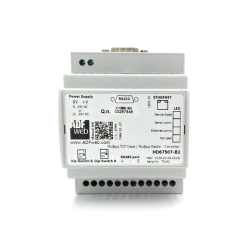
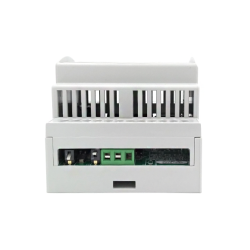
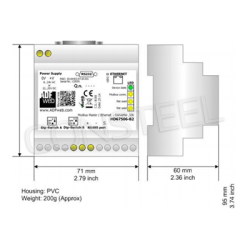
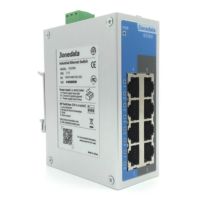
In industrial automation, converter selection does not end with protocols. The device often operates in a control cabinet, close to frequency inverters, switching power supplies, contactors, long signal cables and circuits with different ground potentials. Therefore, it is worth paying attention to galvanic isolation of the RS-485 port, power supply isolation, operating temperature range and EMC resistance. In laboratory projects or simple building installations, an inexpensive converter may work correctly. In industrial installations, a device with a DIN rail housing, industrial power supply, isolated interfaces and clear diagnostics is a better choice. The difference usually becomes visible only after several weeks of operation, when periodic communication losses, CRC errors or transmission freezes under installation load start to appear.
Diagnostics more important than price
A good Modbus RTU to Modbus TCP converter should allow easy diagnostics. In practice, an integrator needs to know:
- whether the Ethernet port is connected,
- whether the converter receives Modbus TCP requests,
- whether it sends frames on RS-485,
- whether RTU devices respond,
- whether CRC errors occur,
- whether the problem concerns addressing, transmission parameters or the network itself.
Useful functions include LED indicators, diagnostic logs, frame preview, error statistics and the ability to test register reading from the configuration software. In small installations, a simple Modbus tester may be enough. In larger systems, lack of diagnostics means long hours spent searching for the fault between the PLC, gateway, RS-485 cable and end device.
When is a simple converter enough, and when is an industrial gateway needed?
A simple converter is enough when:
- there is one or several devices on the RTU side,
- the supervisory system polls registers itself,
- there is no need to change data addressing,
- there are no high timing requirements,
- the operating environment is not demanding,
- basic Modbus TCP to Modbus RTU conversion is sufficient.
An industrial gateway with data mapping will be better when:
- there are many RTU devices,
- data must be made available to many TCP clients,
- it is necessary to organize the register map,
- the address structure must be changed,
- separation is needed between a fast Ethernet network and a slower RS-485 bus,
- the installation operates in a difficult industrial environment,
- stable diagnostics and predictable behavior after communication loss are required.
Example 1: SCADA over Ethernet reads Modbus RTU meters
This is one of the most common scenarios. Energy meters operate over RS-485 as Modbus RTU slaves. The SCADA system runs on an industrial computer in an Ethernet network. In this case, a converter should be selected that will be visible from the Ethernet side as a Modbus TCP communication point, and from the RS-485 side will forward requests to RTU devices.
If SCADA is to poll each meter independently, a transparent gateway with Unit ID support is sufficient. If there are many meters and the data must also be organized, a converter with a register map and cyclic polling will be a better choice.
Example 2: an old Modbus RTU PLC needs to read a new Ethernet device
Older installations often include a PLC controller with an RS-485 port that is not cost-effective to replace. A new analyzer, meter or controller is available only over Modbus TCP. In this case, a standard TCP to RTU gateway may not be sufficient. A converter is required that behaves from the PLC side according to the expectations of the RTU master, and from the Ethernet side communicates with the Modbus TCP device. Register mapping is especially important here. The PLC should not “know” that the data comes from a TCP device. It should receive a stable, predictable Modbus RTU map.
Example 3: many RTU devices, one BMS system
In BMS systems, it is often necessary to collect data from controllers, meters, I/O modules or HVAC devices. If each device has a different address, different registers and a different response time, a gateway with the ability to configure a request list is a good solution. The converter polls RTU devices itself, stores data in memory and makes it available to the BMS system over Modbus TCP. This solution reduces the number of direct requests from BMS to the RS-485 bus and improves the stability of the whole system. It is also easier to service, because the data map on the TCP side can be organized independently of how chaotic the registers in field devices are.
Most common mistakes when choosing a Modbus RTU to Modbus TCP converter
The most common mistake is selecting a device only by the name “Modbus RTU to Modbus TCP converter”, without checking the communication roles. The second mistake is assuming that the converter will speed up RTU communication. Ethernet is faster, but if the data comes from a slow RS-485 bus, RTU remains the limitation.
Other mistakes include lack of RS-485 termination, incorrect parity, duplicated slave addresses, timeouts that are too short, too frequent polling of a large number of registers, lack of isolation in a difficult environment and lack of diagnostics. In practice, many problems do not result from the protocol itself, but from physical and timing errors in the RS-485 layer.
How to choose a Modbus RTU to Modbus TCP converter? Step by step
Before choosing a specific model, it is worth answering several questions:
- Is the supervisory device located on the Modbus TCP side or the Modbus RTU side?
- Should the converter work as a Modbus TCP server, Modbus TCP client, Modbus RTU master or Modbus RTU slave?
- How many RTU devices will be connected to the RS-485 bus?
- What are the transmission parameters: baud rate, parity, data bits, stop bits?
- Should the supervisory system poll devices directly, or should the data be mapped in the converter memory?
- How many TCP clients will use the data simultaneously?
- Is Unit ID support required?
- Is galvanic isolation required?
- Will the device operate in an industrial cabinet, on a DIN rail, at elevated temperature or in an EMC interference environment?
- Does the converter offer diagnostics of frames, errors and communication status?
- Does the configuration software allow setting the register map, timeouts, polling and byte order?
- After communication loss, does the device hold the last values, reset registers or signal an error?
Which converter should you choose?
To connect Modbus RTU with Modbus TCP, you should choose not “any RS-485 Ethernet adapter”, but the right Modbus gateway, selected according to the communication direction, master/slave or client/server roles, number of devices, data mapping method and operating conditions. If a SCADA, PLC or BMS system over Ethernet is to read Modbus RTU devices, the most common choice is a Modbus TCP server to Modbus RTU master/slave converter with Unit ID support or register mapping. If, on the other hand, an older Modbus RTU master must communicate with devices over Ethernet, a converter operating in the opposite mode is needed, often with a data exchange table.
In simple installations, a transparent gateway is enough. In industrial applications where stability, diagnostics, data separation and resistance to interference matter, it is safer to choose an industrial converter with register configuration, isolation, DIN rail mounting and full communication diagnostics. Correctly defining the protocol role and data exchange structure is what determines whether the integration of Modbus RTU with Modbus TCP will operate stably or become a source of difficult-to-detect problems during commissioning and maintenance.
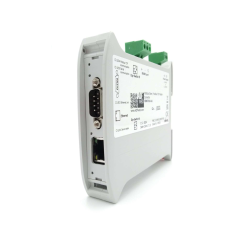
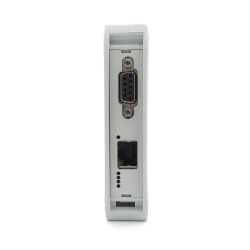
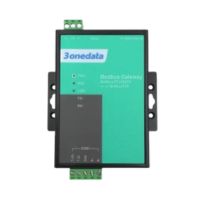
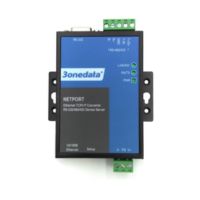
-P1-250x250h.png "GW1101-1D(RS-485) - Industrial Modbus RTU / ASCII gateway to Modbus TCP")
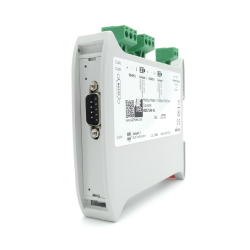
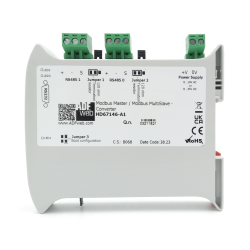
-3-250x250w.png "GW1101-1D(RS-485) - Industrial Modbus RTU / ASCII gateway to Modbus TCP")