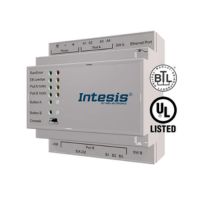
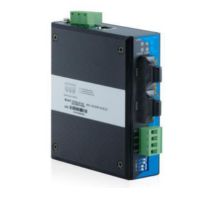
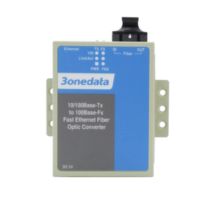
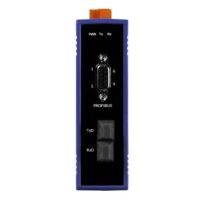
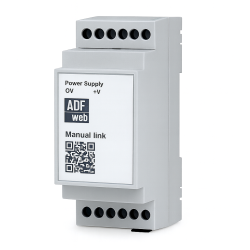
Modbus TCP to HTTP enables industrial automation networks to be connected with web applications, REST systems and higher-level platforms.
Modbus TCP to HTTP converters are industrial communication devices designed to integrate automation systems operating with the Modbus TCP protocol with applications, servers, monitoring platforms and higher-level systems using HTTP or HTTP/REST communication. Solutions of this type are used wherever data from industrial devices must be transferred to an IT environment, web application, reporting system, database, analytics platform or remote operator panel.
The Modbus TCP protocol is widely used in industrial automation, energy systems, BMS, HVAC installations, measurement systems and communication with PLC controllers, HMI panels, meters, power analyzers, input and output modules and actuator devices. It is simple, stable and well known in OT environments. At the same time, HTTP and HTTP/REST are natural data exchange methods for web applications, cloud systems, reporting tools, visualization panels and modern integration platforms. A Modbus TCP to HTTP converter makes it possible to connect these two worlds without a major rebuild of the existing infrastructure.
How does a Modbus TCP to HTTP converter work?
The task of the converter is to collect data from devices operating in a Modbus TCP network, process it according to the configuration and make this information available or transmit it using HTTP communication. Depending on the specific model, the device can operate as a client or server on the HTTP side, handle network requests, cyclically poll Modbus TCP registers and transfer values to the higher-level application in the agreed data format.
In a practical installation, this means that data previously available only in the automation network can be transferred to a system that does not directly support the Modbus TCP protocol. This may be a web application, energy monitoring system, reporting panel, service platform, dashboard solution, local HTTP server or external application using REST API. As a result, register values, device statuses, alarms, measurements and process parameters can be used by IT systems without developing a dedicated Modbus driver from scratch.
Applications of Modbus TCP to HTTP converters
Industrial Modbus TCP to HTTP converters are used in production plants, maintenance systems, energy installations, building automation, BMS, HVAC, water and wastewater management, logistics, machine automation and remote supervision systems. They are especially useful in projects where data from industrial devices must be visible outside a classic SCADA system or transferred to an application developed in an IT environment.
In production systems, the converter can send information about line status, cycle count, temperature, pressure, energy consumption or technological alarms to a web application. In energy systems, it can make data from meters, power analyzers and measuring devices available. In BMS and HVAC installations, it can integrate data related to air handling units, pumps, media meters, air conditioning or technical building monitoring systems. In OEM applications, it can be used as a communication component of a machine, control cabinet or autonomous measuring system.
Why use Modbus TCP to HTTP communication?
The greatest advantage of this type of integration is the ability to use industrial automation data in a web environment without replacing existing devices. PLC controllers, meters, I/O modules and other devices can continue to communicate via Modbus TCP, while the converter takes over the task of translating communication into a format understandable for systems based on HTTP. This makes it possible to keep a stable OT layer while opening it to reporting, analytics, remote monitoring and higher-level software integration.
Another important benefit is simplified implementation on the application side. A web application developer or higher-level system integrator does not need to directly implement Modbus TCP handling, manage registers, device addressing and the details of industrial communication. Data can be made available by the converter in a form that is easier to use in modern software. This reduces integration time, limits the risk of errors and allows process data monitoring or reporting to be launched faster.
What should you consider when choosing a Modbus TCP to HTTP converter?
When selecting a device, it is important to check the communication direction, HTTP operating mode, request handling method, register mapping method, number of supported Modbus TCP devices, data exchange frequency and data format required by the higher-level system. Depending on the application, support for HTTP Client, HTTP Server, REST API, GET or POST requests, cyclic register reading, communication diagnostics and local configuration of network parameters may be important.
In an industrial environment, hardware parameters are also important: power supply, operating temperature range, resistance to interference, Ethernet transmission stability, DIN rail mounting, housing type, connector availability and continuous operation capability. The converter should be selected not only according to the protocol itself, but also according to the number of data points, the character of the installation, the requirements of the higher-level system and the conditions in which the device will be installed.
Modbus TCP to HTTP converters from Consteel Electronics
This category includes Modbus TCP to HTTP converters designed for professional industrial automation installations, BMS, SCADA, HVAC, energy systems, media monitoring and data integration. These devices make it convenient to connect the industrial layer with web applications, reporting systems and solutions using HTTP or HTTP/REST communication.
The selection of the right model depends on whether data must be sent from the Modbus TCP network to an HTTP system or made available to an external HTTP client. The number of devices, number of registers, data addressing method, required communication format, polling frequency and operating conditions in the installation are also important. If you are not sure which converter is suitable for your project, contact our specialist:
we will help you select the right solution for your application.