































Modern Serial Signal Conversion in Industrial Automation: A Comprehensive Analysis of 3onedata model277 Converters (MODEL277-M and MODEL277-S)
-1060x400w.jpg "Modern Serial Signal Conversion in Industrial Automation: A Comprehensive Analysis of 3onedata model277 Converters (MODEL277-M and MODEL277-S)")
Table of Contents
- Challenges of Modern Data Transmission in Industry
- Serial Interface Architecture and Standard Versatility
- Intelligent Data Flow Management (Auto-Sensing)
- Optical Transmission: Medium Selection and Distance Analysis
- Mechanical Design and Optical Connector Ergonomics
- Industrial-grade Reliability and Electrical Parameters
- Diagnostics, Installation and Troubleshooting (FAQ)
- Example Application Scenarios
Challenges of Modern Data Transmission in Industry
In the era of the fourth industrial revolution and the dynamic development of automation systems, reliable data exchange between field devices and supervisory systems is the foundation of technological process continuity. Despite the widespread implementation of Ethernet-based protocols, classic serial transmission standards such as RS-232, RS-485 and RS-422 still form the basis of communication in thousands of installations around the world. They are found in PLC controllers, energy meters, barcode readers, HMI panels, security systems and specialized measuring devices.
Traditional structured cabling based on copper, such as computer twisted pair or shielded cables, however, involves serious physical and technological limitations. The most important of these include:
- Susceptibility to electromagnetic interference (EMI/RFI): Operation near frequency inverters, high-power motors, transformer stations or power lines generates strong magnetic fields that induce fault currents in copper cables, leading to data frame distortion.
- Ground loops: A ground potential difference between distant measurement points or production halls can cause equalizing currents to flow through shields and signal conductors of copper cables, which in extreme cases results in permanent damage to communication ports.
- Risk of lightning discharges: Copper cables routed outdoors act like an antenna attracting surges caused by lightning strikes.
- Distance limitations: The maximum range for the RS-232 standard is theoretically up to 15 meters, while for RS-485/422 it is around 1200 meters with a significant reduction in the permissible transmission speed.
The solution that eliminates all the above barriers at once is the use of optical media. The conversion from an electrical signal into a stream of photons is performed by the advanced 3onedata model277 serial-to-fiber converter. These devices provide full galvanic isolation, complete immunity to radio and electromagnetic environments, and enable data transmission over distances impossible to achieve using copper infrastructure.
Serial Interface Architecture and Standard Versatility
One of the key advantages of the 3onedata model277 family is its hardware versatility with respect to the physical layer of serial interfaces. System designers do not need to order dedicated, separate devices for RS-232, separate devices for RS-485 and separate devices for RS-422. Model 277 integrates all three standards within a single housing.
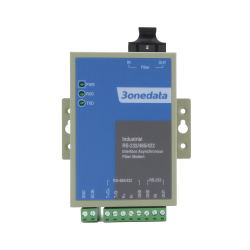
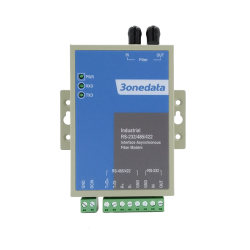
Access to individual electrical signals is provided via an industrial 8-pin screw terminal block, allowing secure and vibration-resistant cable fixing. The table below presents the detailed pin configuration for each operating mode:
| Terminal pin | Signal for RS-232 | Signal for RS-485 | Signal for RS-422 | Functional description |
|---|---|---|---|---|
| 1 | — | — | T+ (Transmit+) | Differential data output (+) |
| 2 | — | — | T- (Transmit-) | Differential data output (-) |
| 3 | — | D+ (Data+) | R+ (Receive+) | Receive / transmit (+) |
| 4 | — | D- (Data-) | R- (Receive-) | Receive / transmit (-) |
| 5 | GND | GND | GND | Signal ground (common) |
| 6 | IN (RXD) | — | — | RS-232 data input |
| 7 | OUT (TXD) | — | — | RS-232 data output |
| 8 | — | — | — | Reserved / inactive pin |
Important application note: Despite the physical presence of all terminals on one terminal block, the converter allows connection and operation of only one serial standard at a time. Attempting simultaneous transmission, for example via RS-232 and RS-485, will lead to signal collisions.
Intelligent Data Flow Management (Auto-Sensing)
In classic converters from other manufacturers, changing the transmission speed or data format (data bits, stop bits, parity) requires the installer to perform cumbersome configuration using DIP switches or dedicated software. The 3onedata model277 series completely eliminates this need by implementing baud rate auto-sensing technology and automatic data direction control (Data direction auto-turnaround).
The device continuously monitors the structure of the incoming bit stream across the full speed range from 300 bps to 500 Kbps. The hardware algorithm instantly adapts to the detected speed, performing asynchronous transmission with zero delay time. This is a critical feature in real-time systems, where any frame buffering could violate the timing regime of higher-level protocols such as Modbus RTU. Moreover, the converter operates in Plug-and-Play mode, supporting hot-plug functionality – it can be safely disconnected and connected under power without the risk of freezing the bus.
Optical Transmission: Medium Selection and Distance Analysis
model277 series converters are divided into two fundamental subgroups depending on the optical transceiver used. The choice between single-mode and multi-mode technology determines not only the maximum fiber line length, but also the cost structure of the entire project.
MODEL277-M Version - Multi-mode Transmission
The version designated MODEL277-M has been designed to work with multi-mode fiber. The core of this type of fiber has a relatively large diameter (most commonly 50/125 or 62.5/125), which causes the injected light pulse to travel through the waveguide along multiple paths (modes). This phenomenon leads to modal dispersion, which limits the maximum transmission distance.
- Operating distance: Up to 2 km (maximum 2.5 km under optimal conditions).
- Wavelength: Transmission is usually performed using a wavelength of 850 nm or 1310 nm.
- Optical power budget: Provides stable connection even when several fusion splices or mechanical connectors are present along the route.
- Application: In-building networks, connections between neighboring control cabinets in one production hall, building automation systems and installations inside logistics halls.
MODEL277-S Version - Single-mode Transmission
For applications requiring coverage over extensive geographical areas, MODEL277-S is dedicated. Single-mode fiber has a very narrow core (around 8.3/125, 9/125 or 10/125), so light propagates only along one axis (one mode). Modal dispersion is practically eliminated here, which allows a drastic increase in distance while maintaining minimal signal attenuation.
3onedata offers a very flexible structure of single-mode models matched to specific distance requirements:
- Model 277-S/20: Basic version, range up to 20 km (most common in local urban and distribution networks).
- Model 277-S/40: Range up to 40 km, dedicated to medium-range backbone buses.
- Model 277-S/60 and S/80: Versions with increased optical transmitter power and receiver sensitivity, intended for distances of up to 60 km and 80 km respectively.
- Model 277-S/100 and S/120: The most advanced units capable of transparent data transmission over distances of up to 100 or even 120 kilometers without the need for any active intermediate devices (regenerators).
Single-mode versions mainly operate at a wavelength of 1310 nm (for distances up to 40-60 km) and 1550 nm (for long-distance versions of 80-120 km, where the unit attenuation of silica fiber is the lowest).
Mechanical Design and Optical Connector Ergonomics
Industrial operating conditions impose strict requirements on network devices in terms of mechanical resistance. The 3onedata model277 series has been designed with these realities in mind.
Types of Optical Connectors
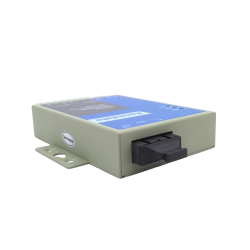
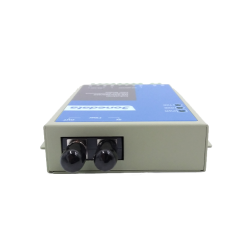
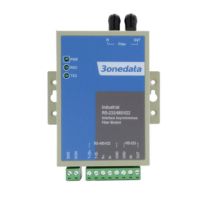
Depending on the standards used in a given industrial plant or project specification, the converters can be factory-equipped with different optical connector standards. The user can choose SC or ST connectors, as well as FC. Each device is equipped with a pair of connectors: a transmit socket (TX) and a receive socket (RX), which means that transmission is performed using two optical fibers (duplex).
- SC connectors (Square Connector): Use a push-pull latch mechanism that provides quick and stable connection, minimizing the risk of accidental patchcord disconnection due to pulling.
- ST connectors (Straight Tip): Use a bayonet (rotary) mechanism, well known from older industrial installations and military systems, characterized by extreme resistance to vibration and mechanical shock.
- FC connectors (Fiber Connector): Threaded connectors, optionally used, ensuring the highest stability of fiber core centering in the socket.
Housing and Installation
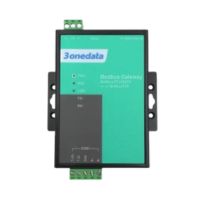
All devices in this series share the same mechanical structure. The housing is made of metal, which provides high resistance to mechanical impact and excellent shielding of internal electronic circuits against radio interference.
- Overall dimensions: 100.0x69.0x 22.0 (an exceptionally compact design that makes installation easier in densely populated control cabinets).
- Weight: 230 g.
- Installation flexibility: The device set includes accessories enabling two mounting methods:
- Using a dedicated bracket for a standard DIN rail (35 mm).
- Directly on a wall or mounting plate using integrated mounting ears with screw holes.
Industrial-grade Reliability and Electrical Parameters
Safe operation near large machines and power installations requires advanced electrical protection levels. In this respect, the model277 series offers parameters significantly exceeding commercial solutions.
Power Supply System
The converters accept a wide DC power supply range: 9 ~ 36 VDC. This allows the device to be powered both from typical 24 VDC automation lines and from systems based on 12 VDC voltage (for example, telemetry systems powered by batteries or photovoltaic panels). Power is supplied to a 2-pin terminal block. The device is exceptionally energy-efficient – current consumption is around only 120 mA at nominal voltage.
Surge and ESD Protection
To protect the internal converter structure and peripheral devices connected to the copper bus, multi-stage protection systems have been built into the input circuits:
- Surge Protection: The serial ports have dedicated 600W surge suppressors that effectively absorb voltage peaks caused, for example, by switching operations in the power network.
- Electrostatic discharge protection (ESD): Provides resistance to discharges up to 15 kV.
Environmental Specification
The devices are adapted for 24/7 operation in unheated technological containers, outdoor cabinets and halls with difficult environmental conditions. The wide operating temperature range is from -25 to +70, with allowable relative humidity from 5% to 95% without condensation. Hardware reliability is confirmed by international FCC, CE and RoHS approvals, and the manufacturer provides a 6-year warranty for these devices.
Diagnostics, Installation and Troubleshooting (FAQ)
Commissioning 3onedata model277 converters is an intuitive process, but the specific nature of optical networks requires appropriate diagnostic procedures. The front panel of the device includes a set of LEDs, which are the basic diagnostic tool for maintenance personnel.
LED Indicator Interpretation
- PWR (Power LED): When continuously lit, it means that the correct supply voltage in the 9-36 VDC range is applied to the device. If the LED remains off, check the polarity of the power wires or the correct operation of the buffer power supply.
- TXD (Transmit LED): Flashing of this LED indicates that the converter receives data from the electrical port (RS-232/485/422) and emits a light stream through the optical transmit port (Optic OUT).
- RXD (Receive LED): Flashing means that the photodetector of the optical port (Optic IN) correctly receives light pulses from the other end of the line and converts them into an electrical signal sent to the terminal block.
- RXDON (Alarm LED): Indicates an optical connection fault (Optic connection incorrect). If this LED is continuously lit while communication is unavailable, it indicates a break in the optical path, swapped TX/RX fibers or excessive line attenuation.
Most Common Communication Problems and Solutions (FAQ)
When implementing systems based on model277 converters, communication loss may occur. The following step-by-step instructions allow quick fault identification:
- Problem: All LEDs are off.
- Solution: Check whether the power terminal block is correctly inserted into the socket. Use a multimeter to make sure the voltage at the terminals is within the permissible 9-36 VDC range and that the positive and negative poles have not been reversed.
- Problem: PWR LEDs are lit on both devices, but there is no data transmission (TXD/RXD LEDs do not flash).
- Solution: Verify correct connection of copper wires to the 8-pin terminal block. Make sure the transmitting device (e.g. computer/PLC) does not have swapped RX and TX lines in RS-232 standard, or D+ and D- lines in RS-485 standard. Remember that only one interface can be used at a time.
- Problem: The RXD LED does not respond and the RXDON alarm LED is lit.
- Solution: The most common cause is crossed optical fibers. The "Optic OUT" port (transmitter) of the first converter must be connected to the "Optic IN" port (receiver) of the second converter. If the physical configuration is correct, the cause may be a damaged patchcord, dirty optical connector end face (requiring cleaning with isopropyl alcohol) or a broken fiber in a splice.
- Problem: Single-mode fiber has been used, but the devices cannot establish a stable connection (high CRC error rate).
- Solution: Make sure there is no hardware mismatch. It is unacceptable to use a multi-mode converter (MODEL277-M) with a single-mode cable and vice versa – this causes huge attenuation and light dispersion. Another cause may be the use of devices from different suppliers with incompatible optical powers or different wavelengths.
Quick Loopback Test Procedure
To finally verify whether the converter itself or the cabling infrastructure has failed, an engineer can perform a loopback test procedure:
- Connect the converter serial port (in RS-232 mode) to the PC COM port using a correctly wired cable.
- Run any terminal program on the computer (e.g. Putty, HyperTerminal) and set the transmission parameters to 9600 bps, 8 data bits, 1 stop bit, no parity.
- Create a physical optical loop on the converter – connect the Optic IN socket directly to the Optic OUT socket of the same device using a short, functional patchcord.
- Start typing characters on the computer keyboard in the terminal window. If the converter is fully operational, the transmitted characters should immediately return through the fiber and appear on the monitor screen (echo), while the TXD and RXD LEDs should flash simultaneously. No returning characters means damage to the internal structure of the device.
Example Application Scenarios
Thanks to their reliability and maintenance-free operation, 3onedata model277 converters have found application in many strategic industrial sectors:
Power Systems and Transformer Substations
In high-voltage power substations, enormous impulse interference is generated when disconnectors are switched. Energy meters and bay protection devices communicating via the Modbus RTU protocol (RS-485) are connected to MODEL277-M converters using short copper wires inside the cabinet, and then the signal is sent via a safe backbone fiber optic cable to the central dispatch room (SCADA system). This significantly reduces the risk of transmitting surges and interference through the communication path.
Intelligent Transport Systems (ITS)
In road traffic control systems, traffic light controllers, variable message signs and measuring cameras are located many kilometers apart along highways. The use of the single-mode MODEL277-S/20 or MODEL277-S/40 version allows all these serial devices to be connected into one unified optical network managed from the city traffic control center.
Mining and Petrochemical Industry
In mines and refineries, where there is a real explosion hazard, routing long copper lines carries the risk of sparkover if the cable is damaged. Fiber optic cable reduces the risk of transmitting interference and surges, but use in Ex zones requires separate assessment and certified installation components. model277 converters installed in safe zones provide transmission to downhole sensors or dosing units without introducing fire risk.
3onedata model277 serial-to-fiber converters represent a mature, proven and highly reliable engineering solution. The combination of support for three standards (RS-232/485/422) with advanced fiber optic technology (both in the multi-mode version up to 2 km and the single-mode version up to 120 km) gives designers a powerful tool for building interference-resistant industrial communication systems. A wide operating temperature range, resistant iron housing, 600W surge protection and an intelligent automatic transmission speed adjustment system make these devices an investment that ensures the stability and safety of technological processes for many years.